



I. Introduction: What Is Web3 Social?
The surge of friend.tech last year has reignited interest in the Web3 social sphere, particularly due to its unique approach to pricing Key Opinion Leader (KOL) influence. This has led to a significant increase in Fear of Missing Out (FOMO) among enthusiasts. Following this, Bodhi's debut also garnered considerable attention by valuing content and facilitating the return of data value. In the domain of social networking, Web3 social represents a phase of novel transformations and explorations. As blockchain technology advances, it is reshaping our understanding of social interactions, introducing a range of groundbreaking solutions. This is evident in both SocialFi (Social Finance) and Decentralized Social (Desoc), where Web3 social actively explores future possibilities for social networks.
Looking back at the evolution of social products, Web2 social platforms like Facebook, X (formerly Twitter), Instagram, WeChat, and others have offered unparalleled ease for users to share, interact, and communicate. Yet, these platforms have inherent challenges. Most Web2 social networks centralize control over user data, often lacking transparency and privacy protection. Additionally, they are typically governed by a handful of centralized entities, leading to controversial debates around creator incentives.
In contrast, Web3 social is redefining social networks in a fundamentally new way. It prioritizes decentralization, user data privacy and control, and leverages the incentive mechanisms inherent in cryptocurrency economics. This has led to the emergence of innovative protocols and products such as Lens, CyberConnect, Farcaster, Phaver, Debox, friend.tech, and more. Concepts like SocialFi blend finance with social networking, transforming the landscape of social interactions. Meanwhile, Desoc strives to build a decentralized social ecosystem, aiming to resolve many of the issues prevalent in Web2 social networks.
Although there has been a longstanding hope that social channels would become the next Mass Adoption, they have yet to achieve widespread application. This raises the question: What does the future hold for Web3 social? Is the growing influx of social products a temporary trend or a step towards mass adoption? This research report delves deep into the fundamental concepts and solutions of Web3 social, examining its current state, benefits, and challenges. It revisits the essence of social interaction, scrutinizes the Web3 social domain, highlights its strengths and challenges, and investigates its potential in redefining social networks.
II. Why Do We Need Web3 Social?
1、The Essence of Social Interaction Remains Unchanged Throughout History
Tom Standage's "A Brief History of Social Media" asserts that the concept of social media, contrary to popular belief, predates the internet era. Human beings have always been involved in various forms of socialization and information sharing. From the days of ancient letters and coffeehouses to the modern digital social networks, the core of social media remains constant; only its mediums and technologies have evolved. Social media is an inherent human characteristic, a manifestation of our perpetual quest for connection and communication.
The progress of technology across different eras has significantly shaped the development of social media, acting as a key catalyst for its transformation.
Ancient and Traditional Media Era: Initially, letters and postal services were the primary communication methods. The advent of printing technology introduced books and newspapers, extending the reach of information, albeit within certain geographical and temporal limits.
Telegraph and Telephone Era: In the late 19th and early 20th centuries, the telegraph revolutionized the speed of information dissemination. The telephone further changed long-distance communication dynamics, facilitating quicker exchanges of information.
Radio and Television Era: These media in the 20th century drastically altered mass communication, expanding the reach of information and influencing cultural, political, and societal perceptions.
Internet and Web 1.0 Era: From the 1990s to the early 2000s, the internet ushered in a new age of information distribution, marked by broader and more immediate access. The Web 1.0 era was characterized by static web pages that primarily provided content in a one-way flow from creators to users, offering limited user interaction.
Web 2.0 and the Emergence of Social Media: Since the mid-2000s, the advent of Web 2.0 brought forth interactive social media platforms like Facebook, X (formerly Twitter), and YouTube. These platforms emphasized user-generated content and interactive functionalities, becoming essential tools for everyday communication, content sharing, and social engagement.
Web 3.0 and Decentralized Social: The latest development, fueled by blockchain and cryptocurrency technologies, has given rise to Web3.0 social platforms. These platforms focus on decentralization, privacy, and user control, aiming to overcome the limitations of Web2.0 social networks, such as concerns over data privacy, algorithmic biases, and content authenticity, to provide a more secure and transparent social experience.
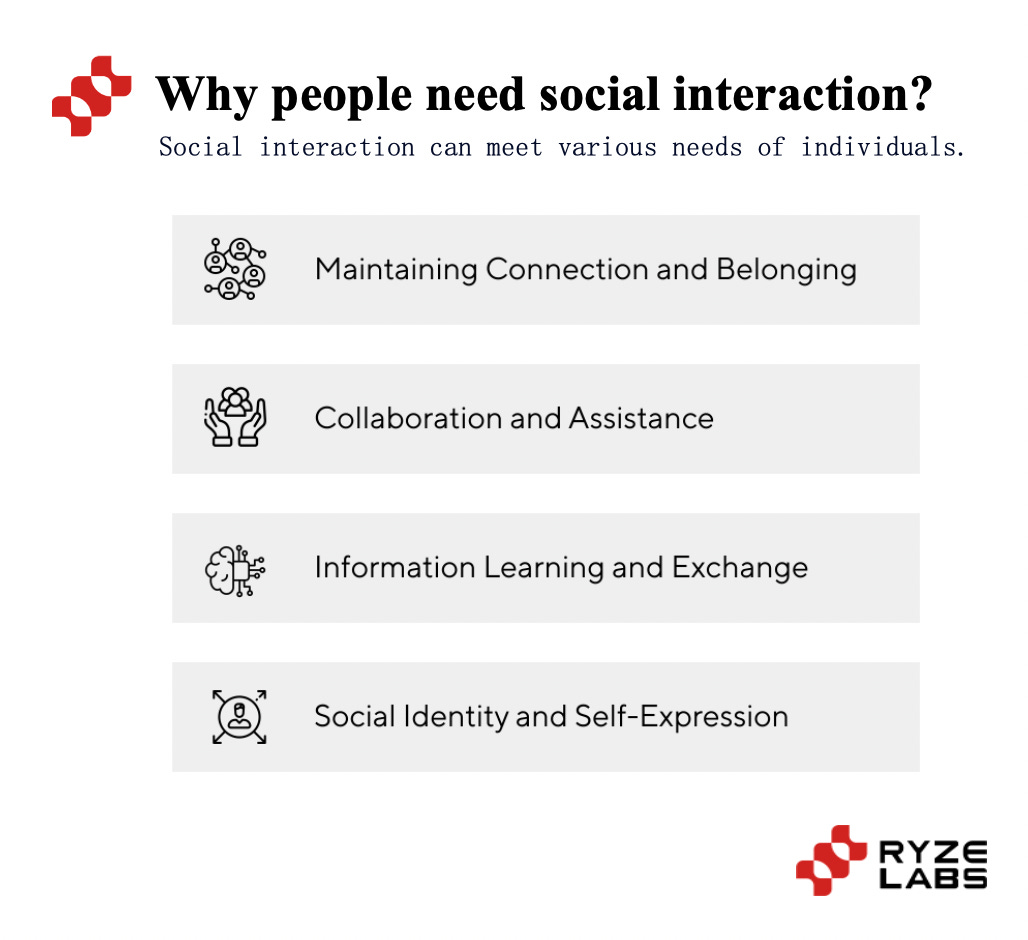
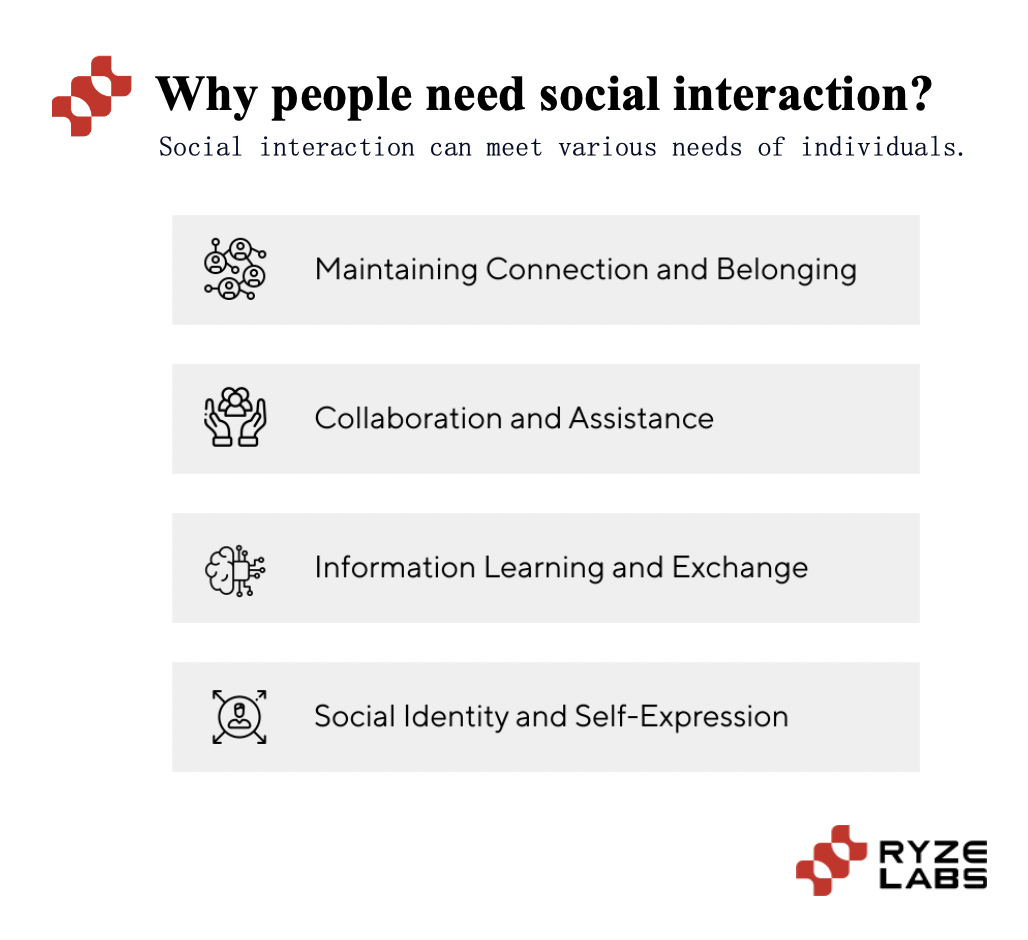
Throughout history, the fundamental human need for social interaction has remained constant, despite the changing mediums of communication, from direct conversations to digital platforms. This need encompasses four primary aspects:
Building Connections and Belonging: Social interaction fosters a sense of belonging, meeting emotional and psychological needs, and enabling the formation of close relationships and support networks.
Learning and Exchanging Information: It facilitates the sharing of experiences, knowledge, and information, promoting learning, development, and personal growth.
Collaboration and Mutual Aid: Social interaction is crucial for collaboration, allowing individuals to work together, solve problems, and achieve shared objectives.
Social Identity and Self-Expression: It provides a platform for individuals to express themselves, build their identities, and gain recognition and validation from their peers.
2、How Web2 Social Catered to the Demand for "Fast, Good, and Economical"
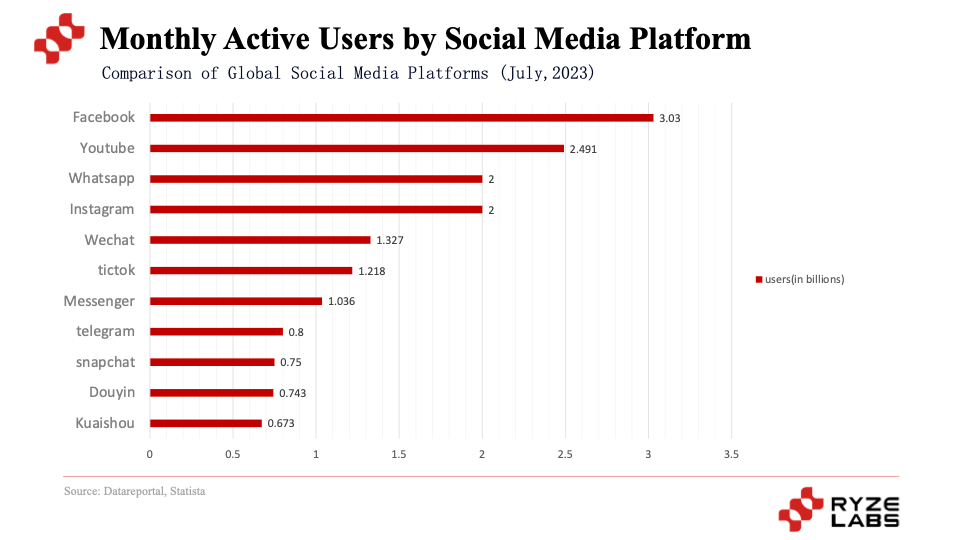
The flourishing of Web2 social media began in the mid-2000s, with Facebook leading the way. It offered a platform for users to share information, photos, videos, status updates, and forge social networks. Following its success, other platforms like X, YouTube, LinkedIn, and others emerged, each with its unique features and functions.
For instance, X, known for its real-time messaging and interactive approach, became a crucial tool for information dissemination and discussion, with its 140-character limit facilitating rapid information spread. YouTube revolutionized the realm of video sharing, becoming a prominent platform for content creation and distribution. LinkedIn specialized in professional networking, providing opportunities for users to build professional relationships, share work experiences, and expand connections. Instagram, with its robust image-sharing capabilities, drew a massive user base, becoming a leading platform for photo and video sharing.
During this era, the focus shifted to user engagement, interaction, and content creation. Websites evolved from static information repositories to dynamic, interactive social platforms where users could create and share diverse content, from text and images to videos, blogs, and profiles. The rise of mobile internet and smartphones further enabled constant access to social media, enhancing convenience and encouraging frequent social engagement.
As user numbers grew, social media increasingly became a primary avenue for commercial activities and advertising. Businesses and brands utilized these platforms for user engagement and product promotion, contributing to the growing market value of social projects. Meta (formerly Facebook), for example, experienced a significant increase in market value after its IPO in 2012, surpassing $1 trillion in 2021.
Reflecting on the development of Web2 social, it's clear that while the essence of social needs remained consistent, the platforms provided faster, more convenient, and cost-effective services. Facebook, for instance, enabled quicker connections with friends and information sharing. X offered speedy access to trending news and interactive discussions, a step up from newspapers and TV. LinkedIn transformed workplace socialization, shifting it from offline interactions to quick online networking. In essence, Web2 social products successfully addressed the "fast, good, and economical" aspects of socialization, meeting the evolving demands of users in an increasingly digital world.
3、Challenges in Traditional Social Media: The Predicaments of Web2 Social
Web2 social media, despite its advancements and widespread adoption, has introduced several significant challenges, particularly in the realms of data ownership and centralization:
1)Data Ownership Issues in Web2 Social Platforms:
Privacy Breaches: A major concern in Web2 social media is the extensive collection and utilization of user data, which poses risks of personal privacy breaches. Platforms might misuse this data or sell it to third parties, leading to privacy violations and potential data abuse.
Value Exploitation: While user data enables social platforms to conduct targeted marketing and advertisements, the users often do not benefit from the revenue generated. This situation leads to a scenario where users' data contributions are exploited for the platforms' financial gain, without appropriate reciprocation to the users themselves.
Data Portability Limitations: In the Web2 ecosystem, user data is owned by the platform, not the users. This means that when registering on different social media platforms, users often have to start from scratch, as their social identity and information cannot be transferred across different platforms. This lack of data portability results in isolated "data islands" for each platform.
Creators on these platforms often find themselves in a predicament. They generate significant value through their content but lack ownership and control over their content data. Deleting personal data on platforms like X or YouTube can lead to the loss of all accumulated content, highlighting the lack of control creators have over their intellectual property.
2)Centralization and its Implications:
Censorship Vulnerability: The centralized storage of information in Web2 social media leads to limitations on freedom of expression. Political, cultural, and other influences can dictate content moderation, often resulting in censorship. This issue is prevalent in platforms like X, Facebook, TikTok, and WeChat, where sudden changes in platform rules, account suspensions, and other restrictions confine users within imposed limitations.
Challenges in Decentralized Alternatives: Although applications like Mastodon attempt to address these issues through decentralization, there are still unavoidable problems. While they may offer a degree of overall decentralization, specific server instances can subject users to risks such as provider authoritarianism, abandonment, or restrictions on other users, indicating that true decentralization is challenging to achieve.
These challenges highlight the underlying predicaments within the traditional Web2 social industry. Users and creators are often at a disadvantage due to the centralized control of data and the platforms' overarching authority, leading to calls for more decentralized, user-centric solutions in the social media landscape.
III. Web3 Social Industry Product Analysis
In response to the array of challenges presented by Web2 social media, the Web3 social industry has embarked on a journey of innovation and exploration, encompassing everything from foundational protocols to application layers. This burgeoning sector is characterized by its diverse range of projects, each designed to address specific pain points associated with Web2 social interactions.
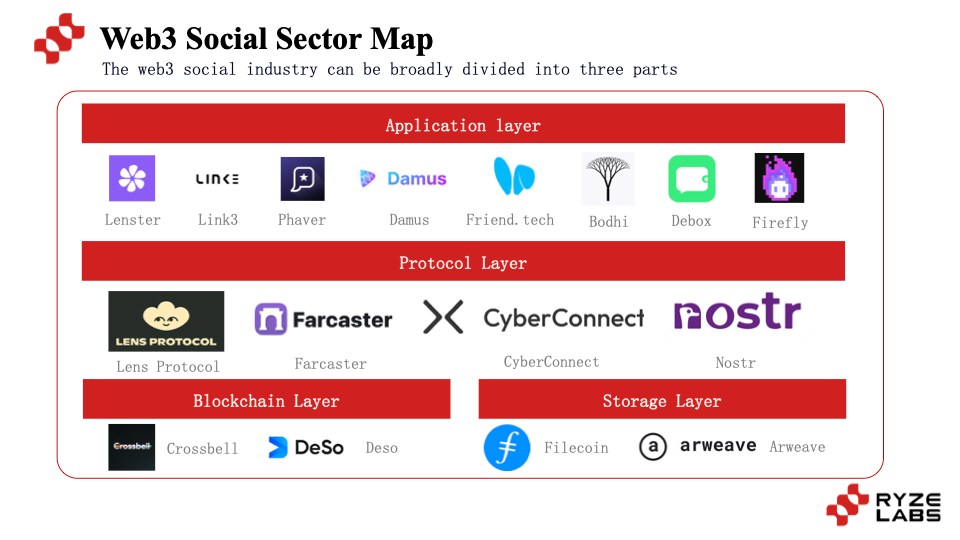
The Web3 social landscape can be segmented into four distinct layers, each playing a crucial role in the ecosystem:
Application Layer: This layer is focused on addressing specific needs in various segmented scenarios. It involves the development of user-facing applications that provide direct social media functionalities. These applications are tailored to meet the unique demands of users in the Web3 space, offering a more decentralized, user-centric experience.
Protocol Layer: The protocol layer serves as the backbone for these applications, offering public development components that assist teams in building their products. It acts as the foundational framework upon which Web3 social applications are constructed, providing essential building blocks for decentralized social media platforms.
Blockchain Layer: The blockchain layer underpins the entire Web3 social infrastructure. This layer is particularly important for social-specific chains that customize Layer 1 (L1) protocols for social applications. Unlike financial Decentralized Applications (DApps), social applications demand higher throughput (TPS), enhanced storage capabilities, and more sophisticated indexing features to accommodate the greater volume of information exchange inherent in social interactions.
Storage Layer: This layer is crucial for housing social-related data. It is where the vast amounts of data generated by social interactions are securely stored. The storage layer ensures that this data remains decentralized, tamper-proof, and accessible, addressing the privacy and ownership issues prevalent in Web2 social platforms.
As the Web3 social track is currently in the phase of value verification, this study aims to conduct a thorough analysis of various Web3 social projects, categorizing them based on their approach to fulfilling different social needs. This comprehensive analysis seeks to understand the development status of these projects and how they collectively contribute to reshaping the landscape of social media in the era of Web3.
1、Data Value Benefiting Users in Web3 Social Products
In traditional Web2 social products, user data is typically treated as an asset of the platform, not of the user. This leads to issues like privacy breaches and value exploitation, where users contribute data but don't receive adequate compensation. Essentially, users' data is freely used and often exploited by platforms for targeted advertising and marketing, without benefiting the users.
Web3 social products are attempting to change this dynamic by implementing token incentives, data NFTs, and other strategies to ensure users benefit from their data contributions.
1)Lens Protocol
The Lens Protocol, developed by the Aave team in February 2022 on the Polygon chain, represents a significant shift in how social graph data is managed and utilized. This decentralized social graph protocol uniquely stores all aspects of users' social interactions — including profiles, content, sharing, comments, and social relationships — as Non-Fungible Tokens (NFTs).
As a standout in the Web3 social space, Lens boasts over 200 applications built on its protocol, with a total ecosystem user count of 370,000. Its peak monthly active users surpassed 60,000 in March, and it currently maintains around 3,000 monthly active users.

Lens Protocol is distinguished by three main features:
Tradable Data Value: In traditional social media, user-generated content and social connections hold significant value, but this is rarely passed back to the users. Lens Protocol addresses this imbalance by tokenizing user data. Each user account is transformed into an NFT, which can be traded in the market. However, the real-world attachment of users to their social accounts means that such transactions are not common, leading to questions about the actual demand for trading social accounts.
Data Circulation: Lens Protocol facilitates the construction of novel social products by providing modular components for social DApp developers. It allows personal profiles and all content data, represented as NFTs and controlled via DID, to be synchronized across applications within the Lens ecosystem. This ensures seamless data circulation, exemplified by the ability of Lens versions of platforms like Twitter and YouTube to interchange data through NFTs.
High Decentralization: In the Lens ecosystem, everything from content and social interactions to user identity is stored on-chain. This high degree of decentralization makes Lens a distinctly crypto-native social protocol.
Several innovative products have emerged based on the Lens Protocol, including Lenster and Phaver. Lenster mirrors functionalities similar to X (formerly Twitter), providing an experience akin to a decentralized version of the platform.
Phaver, on the other hand, introduces a unique "reward through likes" model. In this system, users stake tokens on high-quality content, with rewards shared between stakers and content creators. This model incentivizes the discovery and support of quality content early on, addressing the creator incentive problem by tying content value to user engagement and approval.
2)friend.tech
friend.tech, a notable SocialFi project, has recently experienced a surge in popularity, evidenced by its impressive trading volume of 12.48 million and a record single-day volume of 530,000 on September 13th.
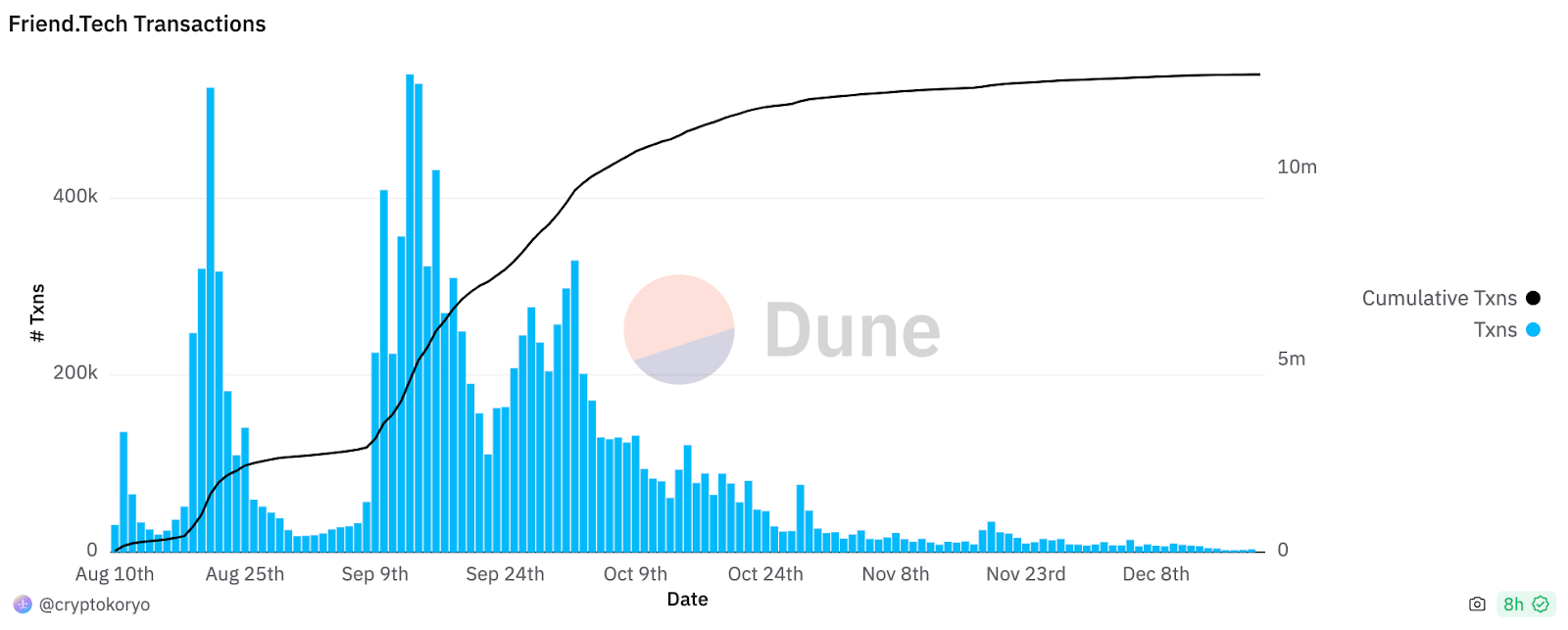
At its core, friend.tech innovatively tokenizes individual influence to cultivate a fan-driven economy:
Fan Perspective: Followers of Key Opinion Leaders (KOLs) can purchase a KOL's "key" on friend.tech, granting them exclusive access to the KOL's private chat group and interactions. As the demand for a KOL's token increases, so does the value of the key, enabling fans to potentially profit from its resale.
KOL Perspective: Each transaction made by followers incurs a 10% fee, with half of this fee going directly to the KOL. This system incentivizes KOLs financially, as their expanding influence and follower base translate into higher transaction fees and increased revenue.
Essentially, friend.tech has developed a model where the influence value of KOLs is monetized. As KOLs gain more reputation and their shares are bought by more users, their value appreciates, leading to higher buying and selling prices.
The rise in popularity of friend.tech, especially during August and September, has sparked widespread discussions in the global crypto community. This interest can be attributed to several key factors:
Innovative Model: friend.tech's model of buying KOL keys with tokens to create a fan-driven economy is groundbreaking. Although it bears some resemblance to a Ponzi scheme, the cycle of KOL endorsements and fan purchases creates a positive feedback loop. This synergy between KOLs and fans fosters a mutually beneficial community, propelling the project's growth.
Capital Injection: The project received a significant boost when it announced a $50 million seed round funding from Paradigm on August 19th. Following this announcement, the trading volume surged, fueled by the backing of a top-tier venture capital firm.
PWA Implementation: Opting for a Progressive Web App (PWA) over a traditional mobile app, friend.tech provides an app-like experience through web browsers on mobile devices. This strategy circumvents the need for app store downloads and associated fees, particularly beneficial in simpler application scenarios.
Additionally, friend.tech's use of invitation code-driven marketing and user-friendly Web2 login methods are strategic moves typically employed in project bootstrapping, contributing to the project's momentum.
Despite experiencing a decline after reaching its peak, the innovative approach of friend.tech in creating a fan-driven economy and sharing value with users has been a source of inspiration for many professionals and project teams within the industry.
3)Bodhi
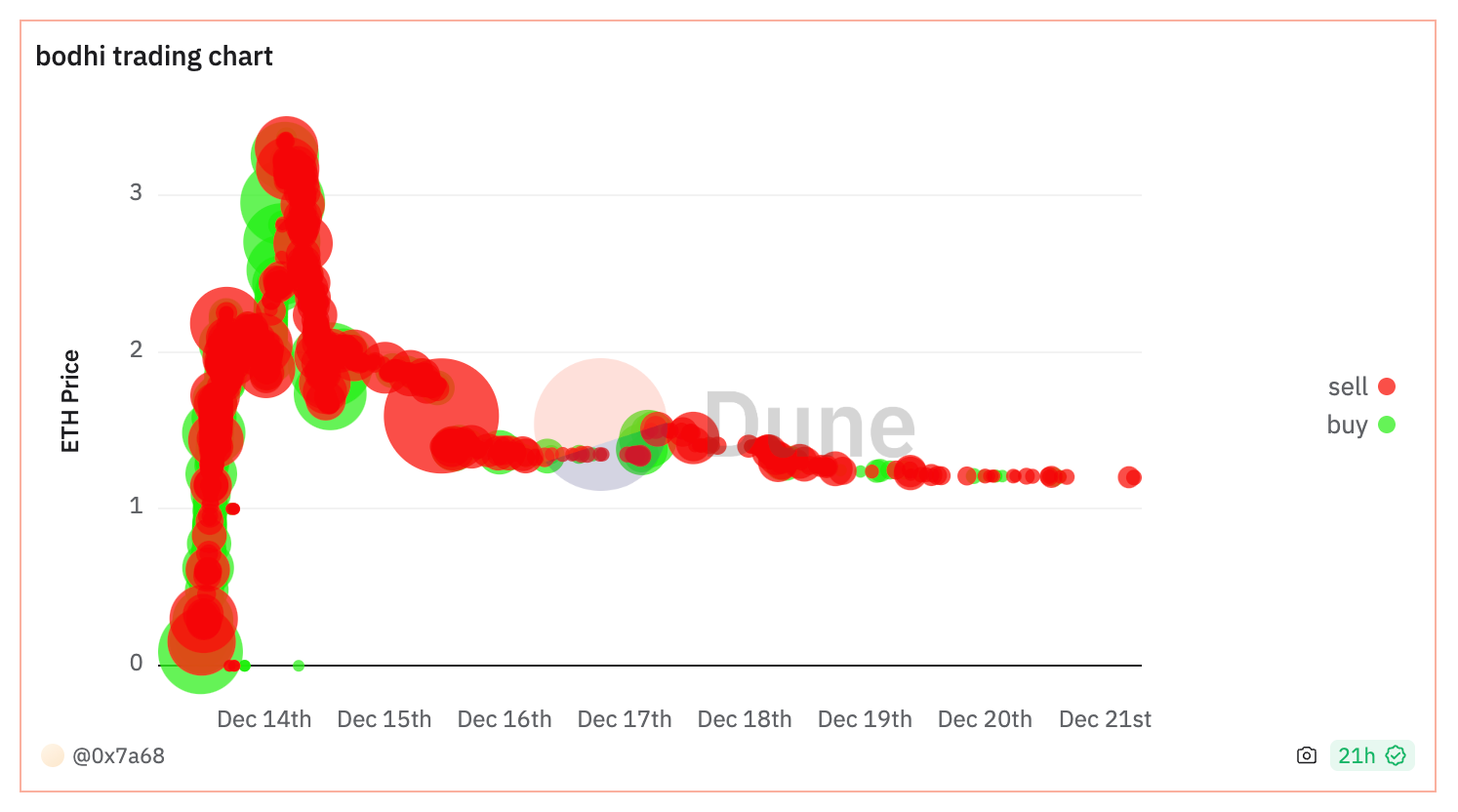
Bodhi, a recent addition to the SocialFi sphere, has swiftly captured attention, particularly within the Chinese-speaking community. It has demonstrated remarkable growth in trading volume and user engagement. Remarkably, within just two days of its launch, Bodhi's Total Value Locked (TVL) escalated to 165 ETH. Adding to its achievements, the project's foundational article, doubling as its whitepaper, reached a peak trading value of over $4000 USD and continues to maintain a value above $2000 USD.
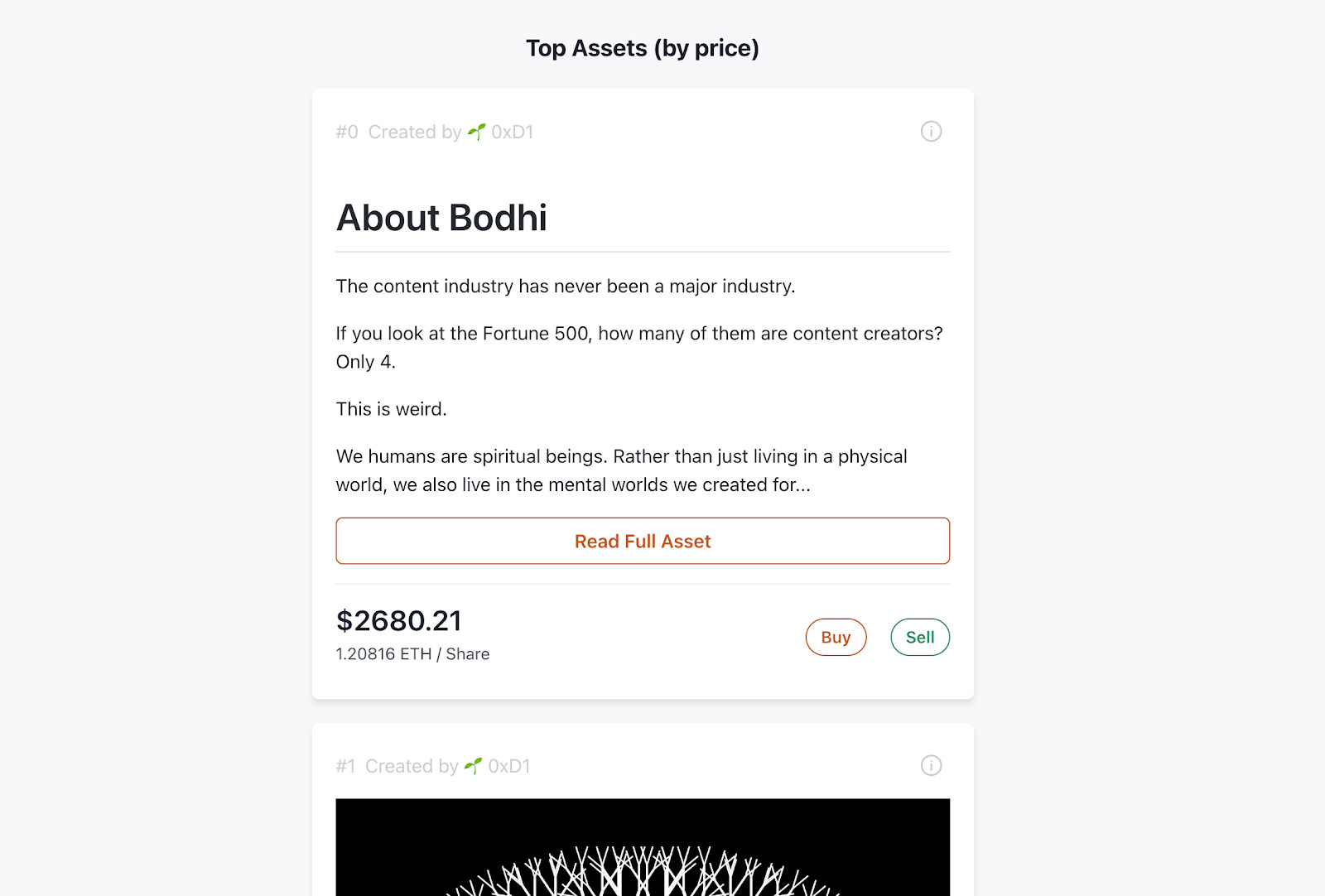
Bodhi's primary focus is on the assetization of content, which parallels friend.tech's approach of tokenizing the reputations of Key Opinion Leaders (KOLs). However, Bodhi differentiates itself by trading individual content pieces created by a user, facilitating more targeted transactions and potentially higher transaction volumes. Additionally, Bodhi employs decentralized storage solutions by storing its content on Arweave.
Highlighted in Bodhi's whitepaper is the challenge surrounding content incentivization within the Web3 framework, particularly concerning the nature of public goods. When content is stored on centralized servers, it's at risk of being lost or removed. On the other hand, storing content on a blockchain and regulating access through content payments introduces the need for encryption and decryption processes. This presents a dilemma, as most decryption processes are still handled by centralized servers, undermining the decentralized ethos. If decryption were to be managed by blockchain mechanisms, the content effectively becomes publicly accessible.
On closer inspection, content stored on-chain exhibits two fundamental characteristics of a public good: universal accessibility and non-rivalrous consumption, meaning one person's access doesn't diminish another's. These aspects pose a significant challenge for content monetization and exclusivity within the blockchain domain.
Despite its initial success, Bodhi has faced challenges in maintaining momentum, primarily due to issues with its economic model. Nonetheless, its foray into content assetization and the exploration of novel incentivization methods in the Web3 environment mark significant advancements in the social media landscape, contributing new perspectives and possibilities to the domain.
4)Current Analysis Summary:
The current landscape of Web3 social products, encompassing both protocol layers like Lens Protocol and application domains such as friend.tech and Bodhi, is actively addressing the need for fair user data value distribution from various angles.
Lens Protocol: This protocol adopts an NFT-based model for users' social graph data. It allows personal profiles and content to be controlled via Decentralized Identifiers (DIDs) and traded freely in the market. This approach not only facilitates the creation of a market for high-value accounts but also enhances data liquidity. Lens Protocol's modular components aid social DApp developers in synchronizing and circulating user data across different applications, promoting interoperability within the Web3 social ecosystem.
Friend.tech: In contrast, friend.tech focuses on tokenizing the influence of Key Opinion Leaders (KOLs). It enables fans to access private chat groups and conversations by purchasing a KOL's "key." This not only allows fans to engage more closely with the KOLs but also provides them with the opportunity to benefit financially from the increasing value of these keys. Friend.tech's model establishes a unique fan-driven economy, aligning the interests of fans and KOLs.
Bodhi: While tackling the aspect of content assetization, Bodhi trades individual content pieces, offering a more targeted approach to transaction and value realization. Although it faces challenges, especially in the realm of content incentivization on decentralized platforms, Bodhi's model represents an innovative effort in returning value to content creators.
Overall, these emerging Web3 social products are pioneering new ways to redistribute the value of user data and content. By implementing mechanisms that enable data circulation, tradability, and fairer sharing of value, they are setting a precedent for more equitable, user-centric, and innovative social platforms. As technology continues to evolve, alongside growing communities and the development of new incentive structures, Web3 social products are poised to significantly reshape the dynamics of social interactions, offering enhanced opportunities and benefits for users and creators alike.
2、Anti-censorship
The shift towards anti-censorship is a key focus in current Web3 projects, addressing the centralization issues like content censorship and speech restrictions commonly faced by traditional Web2 social platforms. Web3 social platforms lean towards decentralization, reducing reliance on centralized entities, thus minimizing censorship risks and advocating for more open freedom of speech. Two notable projects in this realm are Farcaster and Nostr.
1)Farcaster
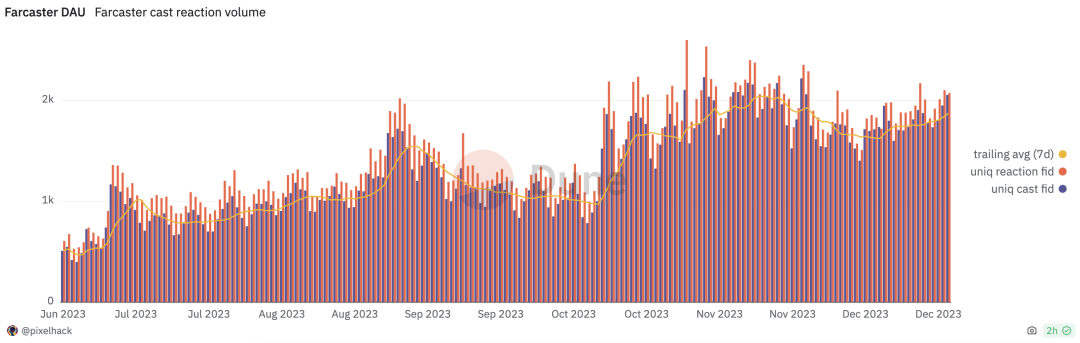
Founded by former Coinbase executives Dan and Varun, and supported by notable figures like Vitalik Buterin, Farcaster is a decentralized social protocol for developing user-centric social applications. The official frontend product, Warpcast, maintains around 2,000 daily active users with a total user count exceeding 40,000.
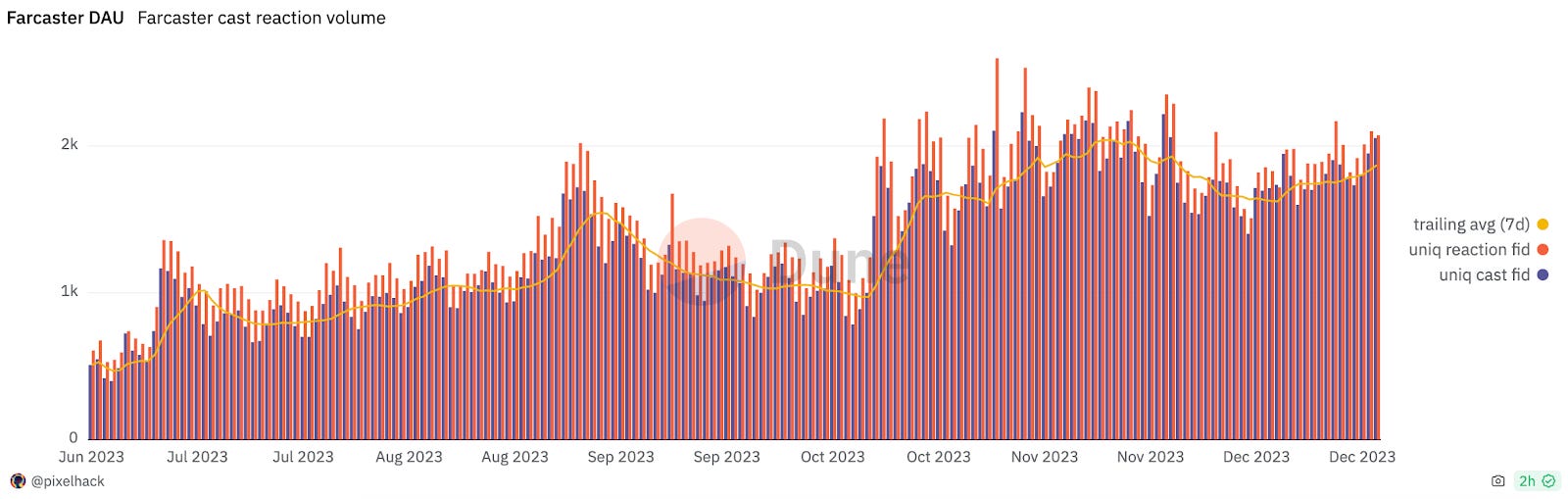
Farcaster’s key features include:
Decentralized identity, ensuring user identity information is stored on the blockchain, akin to Lens Protocol. This facilitates easy migration across various applications within the Farcaster ecosystem.
On-chain/off-chain hybrid model to improve user experience, using Farcaster Hub for storing high-frequency data. While this approach slightly compromises decentralization, it enhances usability.
Despite lower daily active users and total user counts compared to Lens, Farcaster's engagement metrics, such as daily postings and interactions, are higher, indicating strong user involvement. However, Farcaster's subscription model for Warpcast could be a barrier for Web2 users accustomed to free services.
2)Nostr
Nostr, an open-source decentralized social protocol, was developed by an anonymous team led by Fiatjaf, a notable developer in the Bitcoin and Lightning Network communities. Its primary aim is to provide a robust anti-censorship platform.
The unique architecture of Nostr includes a network of clients and "relayers." Relayers, functioning independently, facilitate direct communication with users. Every user possesses a public and private key, with the private key securing access and verifying the sender's identity through unique signatures.
A flagship application of Nostr, Damus, gained considerable attention, especially following an endorsement from former X CEO Jack Dorsey. This led to heightened global interest upon its release on the App Store.
Damus operates similarly to platform X, but its defining feature is its decentralized nature. Built on the Nostr protocol, each user on Damus serves as a client, connecting through a network of relayers. This decentralized structure allows anyone to run a relayer, significantly reducing the risk of official censorship compared to platforms like X. Users enjoy the freedom to choose any relayer, including their own, for content publication, thus enhancing censorship resistance. While Damus maintains basic functionality, it effectively fulfills a growing demand for freedom of expression.
Despite a recent slowdown in Nostr and Damus, episodes of censorship and controversial actions on platforms like X tend to revive interest in Web3 anti-censorship networks. Damus's initial surge in popularity highlighted the ongoing user demand for platforms resistant to censorship.
3)Current Analysis Summary
Traditional Web2 social platforms often suffer from content censorship and speech restrictions due to centralized control. This has increasingly spotlighted the necessity for anti-censorship measures. Preceding the rise of Web3, platforms like Mastodon sought to circumvent these limitations. Now, with the advancement of blockchain technology, more Web3 projects are aspiring to develop social platforms and protocols that are resistant to censorship, in the vein of platforms like X and Facebook.
Both Farcaster and Nostr represent significant strides in this direction. While neither has yet produced continuously active applications, Farcaster's high engagement levels, despite its smaller user base compared to Web2 platforms, show potential. However, its subscription model might hinder wider adoption. The initial popularity of Damus on the Nostr protocol indicated a strong user interest in anti-censorship solutions, although this did not translate into sustained engagement.
Nevertheless, the buzz generated by Damus and the general interest in anti-censorship solutions underscore a persistent curiosity and demand for Web3 social products that champion freedom of speech. These projects, through their innovative approaches against censorship, are opening new pathways for Web3 social interactions and fostering hope for the emergence of groundbreaking applications in the future.
3、Native Social Scenarios Enabled by Web3
Blockchain technology in the Web3 era has gone beyond the primary concerns of data value feedback and anti-censorship to address a variety of inherent social demands. Numerous projects are strategically focusing on specific social needs that have emerged with this technological evolution. A key player in this realm is DeBox.
DeBox: Enhancing Community Engagement
Addressing the "Holding Chat" Issue: In traditional social platforms, distinguishing between genuine token holders or NFT enthusiasts and potential scammers in group chats can be challenging. DeBox innovatively addresses this by implementing criteria for group chat access, such as owning specific NFTs or holding certain amounts of tokens. This ensures that only genuine community members participate, fostering a more secure and focused discussion environment.
Growing Popularity: As of August, DeBox reported over 1.1 million registered users and more than 13 million logins, indicating its rising popularity within the Web3 community. The platform has been particularly noted for its BOX feature, which has been a subject of significant discussion.
Community Building Through Holding Consensus: DeBox kickstarted its user base by integrating multiple NFT sets, attracting a diverse range of users. By using holding as a consensus mechanism, it gathers community members with common interests, enabling spontaneous community governance and reducing irrelevant information within discussions.
Broader Web3 Social Spectrum
Cyberconnect Protocol: Focused on building user social graphs, Cyberconnect is tailoring the social experience to the unique landscape of Web3.
Link3 Project: Link3 aggregates users’ on-chain and off-chain data, offering a more enriched social profile by validating off-chain activities on the blockchain.
Mask Network and Firefly Aggregator: The introduction of the X plugin by the Mask Network and the subsequent launch of the Firefly aggregator represent significant steps in amalgamating content from various Web3 platforms like Lens, Farcaster, and X. This results in a comprehensive and integrated Web3 social platform.
These emerging projects exemplify the diversification and innovation that are defining the Web3 social domain. Each project, including DeBox, Cyberconnect, Link3, and others, is addressing different social interaction needs unique to the Web3 environment. This is leading to the construction of a more diverse and rich social landscape, meeting various native social demands of the Web3 era. These developments signify a shift towards more nuanced and user-centric social experiences in the blockchain era.
IV. Why is Web3 Social Media Comparatively Less Popular Than Other Tracks?
Despite the innovative efforts in data value feedback, censorship resistance, and catering to specific social scenarios, Web3 social media platforms have not yet achieved widespread popularity. There are several key challenges and limitations contributing to this phenomenon:
1、Balancing Decentralization and User Experience
Complex User Interfaces: Many Web3 social platforms have interfaces and operations that are more complex compared to traditional Web2 platforms. This complexity, often involving wallet logins, can be daunting and obstructive for Web2 users who are not familiar with wallets, thereby hindering their transition to Web3 social products.
Educational Barrier: The concepts of blockchain and cryptocurrencies are still relatively unfamiliar to a large segment of potential users. This lack of understanding affects the adoption of Web3 platforms, as users are often hesitant to engage with technologies they do not comprehend fully. To mitigate this, some Web3 projects are incorporating Web2 account logins to lower entry barriers.
Decentralization vs. Efficiency: There is an inherent conflict between the ideals of decentralization and the practicality of efficient user experience. For instance, if all actions and data require on-chain processing, it can lead to a slower and more cumbersome user experience. Projects like Lens have placed all content, social relationships, and identities on-chain, while Farcaster has chosen to store only identities on-chain. Others, such as Debox and friend.tech, keep most data off-chain, except for crucial elements like NFTs or tokens. This variation in approach highlights the struggle to balance user experience with the level of on-chain activity.
Cost and Speed Considerations: Implementing full on-chain processes can be costly and slow, which may detract from the user experience. Conversely, only partially utilizing on-chain features might lead to a "Web2.5" experience, which may not fully align with the decentralized ethos of Web3. Web3 social projects are continuously exploring ways to strike a balance between these factors, aiming to effectively address user needs while providing a satisfactory user experience.
2、High Replacement Costs of Social Products
The migration cost for users of established social products like Facebook, X, Instagram, or WeChat is notably high. This cost isn't just financial; it encompasses time, effort, the learning curve involved in adapting to a new platform, data migration, and the challenge of rebuilding social networks. Users who have invested considerable time in establishing their presence on a platform, uploading substantial data, and familiarizing themselves with its functionalities and interface, are generally reluctant to switch to another platform easily.

In evaluating the value of a new social product, one could say it equals the new experience minus the old experience, further subtracted by the replacement cost. Given the strong network effects of social products, where users build dependencies on specific platforms, the high replacement cost poses a significant barrier to switching. This factor makes it challenging for new platforms, particularly those in the Web3 space, to attract users from established Web2 platforms.
Therefore, for Web3 social projects to successfully draw users, mere replication of Web2 features with added decentralization is not enough. Regular users may not fully grasp the benefits of decentralized storage, but they clearly understand user experience and the tangible costs of migration. Hence, to entice users and gain widespread adoption, Web3 social products need to offer innovative experiences and unique features that distinctively meet user demands, differentiating themselves from existing Web2 products. This requires more than just technological innovation; it calls for a deep understanding of user needs and preferences, and the creation of compelling new reasons for users to make the switch.
3、Sustainability of Feedbacking Data Value to Users
The challenge of sustainability in rewarding data value to users is a significant issue for many Web3 social or "socialfi" projects. These projects often incorporate various economic models to leverage user influence or content. However, most of them are currently in a phase that resembles a Ponzi scheme, where the financial sustainability depends on new users funding the returns of earlier users, rather than generating intrinsic value. As a result, these projects struggle to achieve sustainable development and often become speculative ventures.
To navigate this challenge, finding a balanced token economics model and a functional curve is essential. Such a model should harmonize the financial aspects of the platform with sustainable development, ensuring that social products can feasibly reward users for their data contributions over the long term.
4、Low Overlap Between Social Media Target Users and Web3 User Profiles
The disparity in funding and project numbers between social projects and other sectors like DeFi and Gaming in the Web3 space reflects a crucial underlying issue: a low overlap between the target users of social media and the typical profiles of Web3 users. According to Messari's data from Q3 2023, social projects received around $10 million in funding, significantly less than the $200 million for DeFi projects and $150 million for Gaming projects. Moreover, the number of social projects was substantially lower, with only 6 compared to 67 DeFi projects and 25 Gaming projects.
This disparity is partly because many individuals are drawn to the crypto space with motivations centered around wealth creation and speculation. Genuine social media, on the other hand, relies on authentic user engagement in social activities. Unlike other sectors that can attract users through financial incentives like airdrops or boosts in Total Value Locked (TVL), social projects aiming to fulfill real social needs must attract and retain users genuinely interested in such interactions, not those driven by short-term speculative gains.
The profile of gaming enthusiasts, often characterized by a propensity for risk-taking and competitiveness, aligns more closely with Web3's typical user base, making them a more natural fit for conversion into gaming users. Similarly, DeFi projects appeal to investment-minded individuals. In contrast, the natural differences in needs and motivations between typical social media users and the Web3 community make it more challenging to align the two. This divergence in user profiles and interests is a key factor in why the social track in Web3 seems less vibrant compared to gaming and DeFi sectors.
In summary, the target audience for social media differs significantly from the money-driven, risk-taking, and competitive tendencies often seen in DeFi and Gaming users. Finding ways to align with and appeal to the target audience for social media remains a critical, ongoing exploration for Web3 social projects.
V. Social Media Business Models
Finally, let's delve into the commercial aspects of the Metaverse's business model.
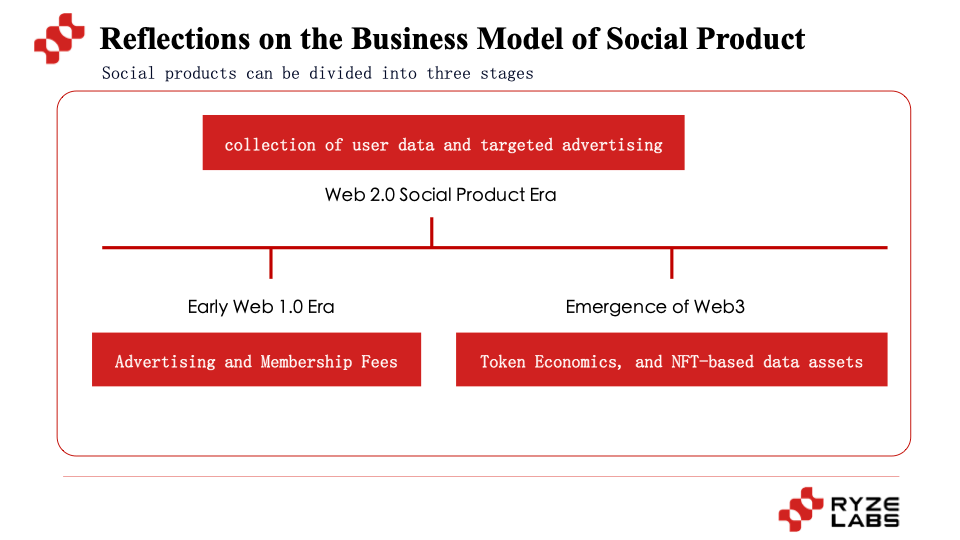
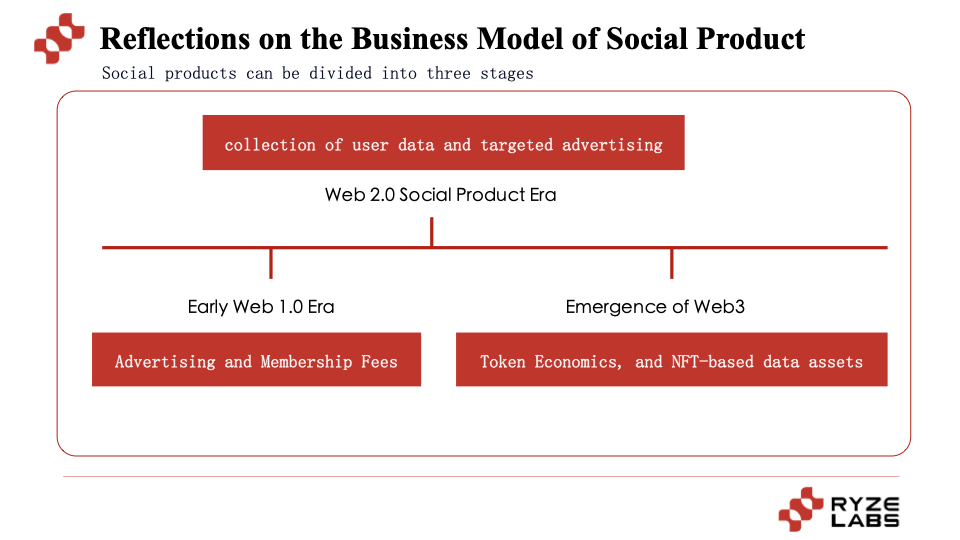
The evolution of social product business models can be divided into distinct stages, each with its own unique characteristics:
Early Web 1.0 Phase (Late 1990s to Early 2000s):
During this period, social products predominantly took the form of forums, chat rooms, and similar platforms. The primary revenue sources were advertising and membership fees. Some forums generated income through displaying ads, while chat rooms charged users membership fees. For example, America Online (AOL) required a membership fee for access, and Yahoo Groups generated revenue through ad displays.
Web 2.0 Social Media Phase (Mid to Late 2000s to 2010s):
As internet technology advanced, social media and networking platforms gained prominence. The business model during this phase mainly revolved around ad displays and the collection of user data. Social media platforms generated revenue through ads and targeted advertising. User data became a valuable asset used for personalized advertisements and marketing. Platforms like Facebook, X, and TikTok predominantly operated under this model.

Emergence of Web3 (Late 2010s):
The arrival of Web3 brought blockchain technology and decentralized concepts into the picture. Social products began exploring novel business models, such as data value feedback, token economics, and NFT-based data assets. Users gained more control over their data, allowing them to participate in governance and receive rewards for sharing data. For example, Lens tokenizes data assets into NFTs, platforms like friend.tech and Bodhi assign value to influence and content, providing users with a stake in the value, while Farcaster still adheres to the traditional subscription-based model.
Additionally, when introducing Web3 social products, it's crucial to consider regional market variations inherent to social products. One significant aspect of this is addressing the economic challenges faced by content creators.
Currently, the primary income model for creators still largely revolves around Business-to-Business (ToB), with Consumer-to-Consumer (ToC) playing a secondary role. Many platforms, both domestic and international, offer relatively modest incentives for content views and clicks, which forces content creators to rely on amassing substantial traffic to attract advertising revenue from the ToB side. Some creators have started experimenting with ToC approaches like e-commerce, but both income models can have negative impacts on the creators' brand and reputation. Therefore, many Web3 social projects aim to begin with a ToC model, allowing creators to directly receive fair compensation for high-quality content. This approach is also followed by friend.tech and Bodhi, which employ influence and content incentives.
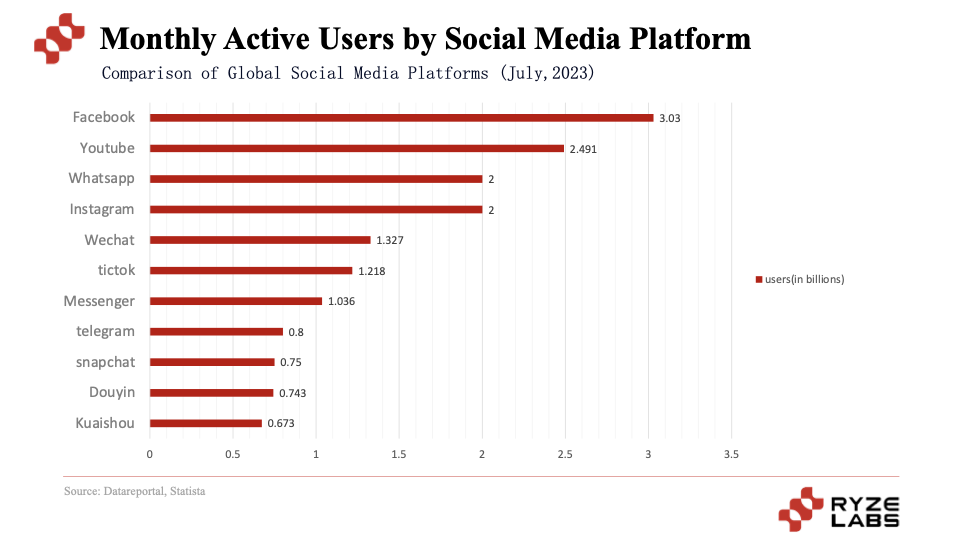
However, there is a difference in approach. In the domestic market, social and creator platforms face significant traffic monopolization. Platforms like WeChat, TikTok, and Kuaishou dominate the majority share, wielding substantial control and offering creators limited bargaining power with minimal revenue shares. Consequently, Chinese creators often find it challenging to sustain themselves solely through platform-based traffic incentives and often turn to ToB models for business income, including advertisements and live-streamed product endorsements. However, due to the platform's dominance, redirecting traffic to private domains is challenging. Therefore, Chinese creators tend to focus on studying platform recommendation strategies, producing content types that generate higher traffic volumes, and then monetizing that traffic.
In contrast, the monopolistic situation for social platforms in overseas markets is slightly better than in domestic markets. There's relatively more fluidity between public and private domain traffic, while in China, the concept of the private domain emerged due to the overwhelming dominance of the public domain. Consequently, creators on overseas social media platforms such as Instagram and YouTube, once they amass followers, can redirect traffic to their independent sites or web pages to sustain themselves. This freedom enables many overseas creators to create niche content they enjoy, which also seamlessly redirects to their private domains.
Facing distinct competition patterns of traditional social products across different regions, Web3 social projects should consider employing diverse strategies when entering the market.
Overall, the business models of current Web3 social projects are still in a phase of diverse exploration and validation. Looking back at the history of social products, the evolution of business models has transitioned from a single advertising revenue model and membership income to precise advertising after data monopolization, and now to the trend of returning data value to users through tokens/NFTs. The future direction may emphasize user data value, participation, community governance, and more diversified business models.
VI. Exploration of the Future of Social: Collision Between Web3 Social and the AI Wave
In the midst of rapid technological advancements, two prominent domains, Web3 and AI, have emerged as significant players in shaping the future of social interactions. This holds true as we explore the evolving social landscape. Alongside the growth of Web3 and Crypto social projects, we've witnessed a surge in AI projects. Even traditional Web2 teams are now integrating social platforms with AI technology, finding diverse applications in matchmaking, translation, and the development of virtual personas.
For example, in the Chinese market, Soul has introduced "AI Guodan," an intelligent conversational AI designed for personalized user interactions. Similarly, Baidu has launched the AI-powered social app "Skyclub" to re-enter the social arena with the added dimension of AI. On the international front, Meta has integrated AI into social feed recommendations, significantly enhancing user engagement. Last year, algorithm refinements increased user engagement on Facebook by 7% and on Instagram by 6%. These developments in both domestic and international products underscore the importance of amalgamating social platforms with AI.
AI, as a tool for boosting productivity, has found fertile ground in the realm of social interactions. A noteworthy area of exploration involves merging social platforms with AI agents to create virtual companions, fulfilling human needs for companionship and emotional support. For instance, Character.AI, backed by A16Z, generates human-like text responses and engages in contextual conversations, creating intelligent chatbots for user interaction.

As mentioned earlier, one of the fundamental human needs in social interaction is the fulfillment of emotional and mood-based requirements, establishing intimate relationships, and receiving support. Currently, AI + social projects primarily focus on addressing these emotional needs, venturing into uncharted territory to explore whether AI-driven virtual entities can fulfill these needs in real-time. The market is still in the process of validating the demand and value of human emotional companionship provided by AI.
In the evolution of social products, we observe that Web3 and AI possess complementary potential in the social domain. Unlike AI's role in enhancing productivity, Web3's characteristics in production relations and financial incentives empower social products in unique ways. For instance, Myshell, incubated by Binance, combines AI with Web3, enabling users to create their AI bots. It has introduced Samantha, a Telegram-based voice chatbot, to address the need for human emotional companionship. The ecosystem's token, shell, incentivizes consumers to pay for features and creators to gain exposure through token usage.
Furthermore, Siya.AI, within the recent Solana ecosystem, aims to construct a social companionship platform coexisting with AI and real individuals. It seeks to make AI agents an entry point for internet and Web3 users, introducing incentive mechanisms for creator economies and AI companions by integrating the SDK provided by Realy. Through the fusion of AI and Web3, Siya.AI aims to fulfill emotional companionship needs in social interaction. Users engaging in conversations with AI companions can also participate in chat mining and NFT incubation.
In summary, AI and Web3, as two transformative waves of the new era, are making distinct contributions to the realm of social interaction. AI focuses on emotional companionship and support, while Web3 emphasizes returning user data value and resisting censorship, both of which are in the early stages of development. Regardless of their specific focus, the overarching goal is to better satisfy humanity's fundamental social needs. As we continue to explore the world of social products, collaboration and complementarity between AI and Web3 emerge. There is great anticipation for the emergence of the next major-scale social application, driven by these new technologies and models. Perhaps, the convergence of AI and Web3 in the social domain will spark innovations that more effectively cater to the diverse social needs of humanity.
VII. Conclusion
Social interaction, a fundamental human need transcending age and circumstance, serves as the gateway to Web2's industry, boasting the highest Daily Active Users (DAU). Since the inception of Web3 social concepts, there has been immense anticipation among Web3 practitioners for widespread adoption.
On a positive note, Web3 social platforms herald revolutionary changes in terms of data value and user feedback. In stark contrast to traditional Web2 social products, Web3 treats user data as a precious asset, employing token incentives and NFTs to return the value of data to its rightful owners. This is underpinned by the principles of user data sharing, creator incentives, and community consensus.

Furthermore, the censorship resistance inherent in Web3 social products bestows upon users greater freedom and enhanced privacy protection. Harnessing blockchain technology and decentralization, these platforms mitigate the risks of censorship and bans, advocating for the unfettered freedom of speech. This creates a safer, more open social environment, fostering authenticity and freedom in social interactions.
However, present-day Web3 social platforms encounter challenges and have yet to achieve widespread adoption. Formidable obstacles include high replacement costs and the formidable network effects established by traditional social products. The entrenched network effects among users make it arduous for them to transition to new Web3 social platforms, owing to habituation, resource investments, and platform dependence. The struggle to replicate the success of Web2 products hampers the expansion and growth of Web3 platforms. Balancing sustainability with user experience is another challenge. Some Web3 social products prioritize decentralization and data control, sometimes at the expense of user convenience and experience. Striking the right balance between innovation and user-friendliness is critical for ensuring user retention and engagement.
Tom Standage's book, "Writing on the Wall: Social Media - The First 2,000 Years," underscores the enduring human need for social interaction. Regardless of technological evolution, humans consistently yearn for information exchange. From ancient Roman politicians using papyrus for communication to pamphlets during the American Independence and French Revolution, and from newspapers, radio, and television to the internet and blockchain technology, the human quest for a balance between speed, quality, economy, freedom of speech, and censorship remains unyielding.
While Web2 social products like Facebook, X, and WeChat offer faster, better, and more affordable communication and dissemination compared to telephones, text messages, and newspapers, Web3's core focus is on resisting censorship and restoring data value to users. Although Web3 has not yet achieved the widespread adoption of Web2 products, the demand for censorship resistance and data value return continues to simmer in the minds of users, awaiting a breakthrough moment.
Looking to the future, the attribute of community looms large. Social interactions are not unidirectional broadcasts but rather oscillate between centralization and decentralization. Community consensus is a pivotal facet of Web3 social, and the characteristics of data sovereignty and openness align seamlessly with the aspirations of decentralized communities. Communities have the potential to facilitate multidirectional interactive social engagement and may well represent a future direction for Web3 social products. Furthermore, the intersection and integration with other domains, such as gaming, have the potential to ignite fresh waves of innovation.
Despite the challenges and limitations faced by Web3 social, particularly in user profiling, it remains a beacon of hope for many. Emerging projects and technologies continually propel progress in this field. As technology continues to advance, we witness ongoing explorations and enhancements in terms of sustainability and user experience. This field matures continually, seeking its unique development path, introducing ever more innovation to users, and exerting a profound influence on the broader social landscape.
作者:Fred
导航目录
本文 1.2 万字,阅读时间大约为 10~15 分钟
一、引言:Web3 社交是什么?
二、为什么需要 Web3 的社交?
三、Web3 社交行业产品分析四、为什么 Web3 社交相比其他赛道相对冷清?
五、社交的商业模式
六、社交的未来探索:Web3 社交与 AI 浪潮的碰撞
七、总结
引言:Web3 社交是什么?
前几个月 friend.tech 的火爆再次引起了人们对于 Web3 社交的关注,通过将 KOL 的影响力赋予价格的玩法引起了很多人的关注和 fomo ,后来出现的 Bodhi 也引起了不少人的关注,通过将内容赋予价格,实现数据价值的回归。在社交网络领域, Web3 社交似乎在进行着一些新的变革和探索。随着区块链技术的发展,它正在重新定义我们对社交的看法,并提供了一系列创新性的解决方案。无论是社交金融(SocialFi)还是去中心化社交(Desoc),Web3 社交正积极探索着未来社交网络的可能性。
回顾社交产品的发展,Web2 社交产品如 Facebook、X(原 twitter)、Instagram、微信等等,给予了用户分享、互动和交流的前所未有的便利性。但这种便利性背后也隐藏着一些困境。Web2 社交平台通常集中掌控用户数据,缺乏透明度和隐私保护,而且平台治理和决策往往由少数中心化实体控制。此外,创作者激励也是 Web2 社交产品倍受争议的一点。
与此同时,Web3 社交正以一种全新的方式重新定义社交网络。Web3 社交强调去中心化、用户数据隐私和控制权,以及加密货币经济学的激励机制,涌现出了 Lens、CyberConnect、Farcaster、Phaver、Debox、friend.tech 等协议和产品,SocialFi 等概念将金融和社交融为一体,重新塑造着社交网络的面貌。而 Desoc 则着眼于建立去中心化的社交生态系统,以消除 Web2 社交网络中存在的诸多问题。
虽然 Social 赛道在很长一段时间被寄予下一个 Mass Adoption 的厚望,但从诞生到现在始终没有产生大规模应用,Web3 社交的未来究竟会如何呢?层出不穷的社交产品究竟是昙花一现还是下一个 Mass Adoption ?这篇研报将深入探讨 Web3 社交的核心概念和解决方案,剖析其发展的现状、优势与挑战。我们将回归社交的本质,审视 Web3 社交领域领域,揭示它们的优势和挑战,并探讨它们在重新定义社交网络中扮演的角色。
为什么需要 Web3 的社交?
1、社交的本质不随历史的发展而改变
正如 Tom Standage 的《社交媒体简史》中提到,我们往往认为,社交媒体是一个新兴的概念,随着互联网和数字技术的发展而诞生的。然而,事实上,人类一直在不同的形式中进行社交和信息传播。从古代的书信、咖啡馆到现代的社交网络,社交媒体的本质并未改变,只是其形式和技术工具不断演进。社交媒体是一种人类特性的延伸,是我们不断追求联系和交流的一种方式。
从不同的历史阶段来观察,技术对社交媒体的发展和演变产生了重大影响,是重要的变革推动器。
- 古代和传统媒体时期:在古代,书信、邮政等方式是主要的社交媒介。随着印刷术的发明,书籍和报纸成为了信息传播的主要工具,但社交范围受到了地域和通信速度的限制。
- 电报和电话时代:19 世纪末至 20 世纪初,电报的出现缩短了信息传播的时间,电话的普及改变了远距离沟通的方式,人们可以更加迅速地交流信息。
- 广播和电视时代:20 世纪的广播和电视媒体改变了大众传播的方式,使得信息可以更广泛地传播,塑造了文化、政治和社会观念。
- 互联网和 Web1.0 时代:20 世纪 90 年代至 2000 年代初,互联网的出现使得信息传播更加广泛和即时化。Web1.0 时代主要由静态网页组成,内容主要为官方向用户的单向传递,用户无法主动参与内容创作,社交性较低。
- Web2.0 和社交媒体兴起:2000 年代中期至今,随着 Web2.0 的兴起,出现了更加互动和用户参与的社交媒体平台,如 Facebook、X 和 YouTube 等。这些平台提供了更多的用户生成内容和社交功能,成为人们日常交流、分享和互动的主要工具。
- Web3.0 和去中心化社交:最近,随着区块链和加密货币技术的发展,出现了更注重去中心化、隐私保护和用户控制的 Web3.0 社交平台。这些平台试图解决 Web2.0 社交存在的问题,如数据隐私、算法过滤和信息真实性等,并提供更加安全和透明的社交体验。
容易发现,人类自古以来就拥有社交的需求。但究其本质,无论是当面社交、飞鸽传书还是刻在石板上传给他人,人类对于社交的需求的本质却没有随着时代的发展有太大的改变,核心需求总结为以下四点:
- 保持联结和归属感:社交让人们感到有归属,满足情感和情绪上的需要,建立亲密关系并获得支持。
- 信息学习和交换:通过社交,人们可以分享经验、知识和信息,促进学习、发展和个人成长。
- 合作与互助:社交有助于人们协作、合作,共同解决问题和实现共同的目标。
- 社交认同和自我表达:社交是人们展示自我、建立身份认同和获得认可的方式。
2、Web2 社交解决 “快、好、省” 的需求
在 2000 年代中期以后,Web2 社交媒体开始蓬勃发展。Facebook 成为了其中的先驱,它提供了用户分享信息、照片、视频、状态更新等功能,并让用户能够构建社交网络。随后,X、YouTube、LinkedIn 等多种社交平台相继出现。
每个平台有着不同的特色和功能,如 X 以其独特的即时消息传播和社交互动方式,成为了信息传播和讨论的重要平台。它的 140 个字符限制迅速传播信息,成为了新闻和话题讨论的热点;YouTube 作为视频分享平台,改变了人们观看和分享视频的方式,成为了广受欢迎的内容创作和分享平台;LinkedIn 专注于职业社交,提供了一个专业网络,让用户能够建立职业关系、分享工作经验和拓展人脉;Instagram 以其强大的图像分享功能和社交互动性,吸引了大量用户,成为了照片和视频分享的主要平台之一。
在 Web2 的阶段中,强调用户参与、互动和内容生成,网站从静态的信息展示转变为更加动态和互动的社交平台,使用户能够创造和分享内容,从简单的文字和图片到更丰富的视频、博客和个人资料。随着移动互联网的发展和智能手机的普及,人们可以随时随地访问社交媒体平台,推动了社交活动的便捷化和频繁化。
并且随着用户规模的增加,社交媒体逐渐成为了商业活动和广告推广的主要平台,企业和品牌利用社交媒体吸引用户和促销产品,社交项目的市值也一路攀登,其中的龙头公司 Meta(原 Facebook) 从 2012 年 IPO 以来市值一路飙升,在 2021 年市值突破了 1 万亿美元。
回顾 Web2 社交的发展历史,社交需求的本质未变,核心改变的是提供更快速、更方便、更便宜的服务。Facebook 让人更快的去结识朋友和分享信息,X 使人更快的看到热点新闻和互动讨论(相比报纸和电视),Linkedln 使得职场社交从只能线下介绍转变为线上快速职场交友… 本质上 Web2 的社交产品解决的是社交的” 快、好、省” 的需求。
3、传统社交行业困境
然而,Web2 社交也带来了一些问题,核心可以总结为数据所有权和中心化两方面:
1)数据所有权:在 Web2 的社交产品中,用户的数据并不属于自己,而是属于平台,这会导致产生许多的问题。
- 隐私泄露:用户数据被大量收集和利用,导致了个人隐私泄露的风险。平台可能滥用用户数据,或将其出售给第三方,引发隐私泄露和数据滥用问题。
- 价值没有反哺用户:用户的数据使得社交平台可以进行精准的营销等广告行为,然而用户却无法从收入中获得好处,导致用户的数据提供被平台白嫖。
- 无法跨平台:由于用户的数据归平台而不是自己所以,所以在不同的社交媒体上注册时往往需要从 0 开始,自己的社交名片等信息无法在多种社交平台中流通,每一个社交平台都成为了一个孤岛。
在 Web2 的社交环境下,很多创作者反馈创造了大部分的价值后根本拿不到应有的报酬,或者拿到非常微小的一部分。可以在社交媒体平台上面做自己的 IP,但对于创造的内容数据和价值却没有所有权和控制权。一旦 X、Youtube 删除个人资料后,就会丧失所有的内容数据积累。
2)中心化:在 Web2 社交产品中,平台拥有对内容的无限使用权利。
- 抗审查能力弱:由于 Web2 的信息都存储在了中心化的服务器里,导致受到政治、文化等因素的影响后,言论自由在很多国家的 app 里都没有办法实现,某种程度上被剥夺了自由表达的权利。无论是 X 规则的朝令夕改、封号,还是 Facebook、tiktok、微信,在中心化的平台里,都有太多中心化的限制和约束,让用户只能在镣铐下跳舞。
虽然有长毛象这样的应用在去中心化方面做出努力,但仍然存在很多无法避免的问题,虽然整体来看是去中心了,但是在特定的服务器里,用户仍会有受到该服务器提供者专制、抛弃和禁止他人的风险。
Web3 社交行业产品分析
面对 Web2 社交存在的种种问题,Web3 的产品开始从多个方面进行探索,从协议层再到应用层,Web3 的 social 项目百花齐放,来解决 Web2 社交中不一样的痛点。
从 Web3 社交的整个大行业来看,Web3 社交产业可以大致分为 4 个部分,应用层、协议层、区块链层和存储层。其中社交专有链为社交 app 提供定制化的 L1 来更好的服务于社交 app 的需求,因为社交应用比金融类 Dapps 需要更多的信息交换,从而对更快的 TPS 以及存储和索引等功能有更高的要求;存储层用来存储社交相关的数据;协议层提供公共的开发组件来帮助团队搭建产品;应用层根据具体的需求来切入一个细分场景。
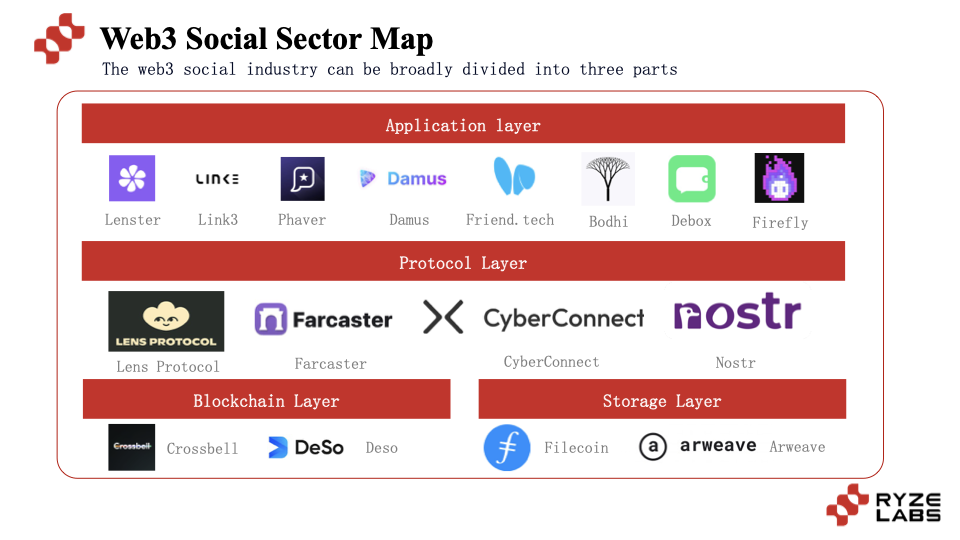
由于目前整个 Web3 社交赛道仍处于价值验证阶段,因此本研究选择从社交的不同需求点出发,来分析 Web3 社交项目,尽可能全面的剖析目前各类项目的发展现状。
1、数据价值反哺用户
在传统的社交产品中,用户的数据被视为平台资产而非用户自身财产。这种情况下,社交平台可以利用用户提供的数据,实施精准的广告定向和个性化营销。然而,遗憾的是,这些数据的价值并没有得到合理的反馈和回报,用户很难从自己数据的价值中获得利益。实际上,用户的数据贡献被视作一种无偿供给,由平台自由使用,从而导致了数据被 “白嫖” 的情况。
在这个模式下,无论是创作者创造的内容价值还是用户提供的个人数据,最终所创造的收益大部分被社交平台垄断。这种集中式控制导致了用户和创作者在数据价值分享方面所能获取的收益微乎其微。
而新型的 Web3 社交产品却试图颠覆这种模式,通过代币激励、数据 NFT 化等不同的方式来解决这一困境。
1)Lens Protocal
Lens Protocol 是一个去中心化的社交图谱协议,由 Defi 借贷项目 Aave 的团队在 2022 年 2 月 8 日创立,在 Polygon 链上。其最大的特点在于所有用户拥有的社交图谱数据,包括个人资料、内容的发布分享与评论和社交关系都会以 NFT 的方式存储。
Lens 作为 Web3 社交赛道的代表性协议,上面构建的应用数量超过了 200 个,目前生态总的用户数达到了 37 万。其中每月活跃数量用户在今年 3 月峰值时超过 6 万,目前的月活用户维持在 3 千。
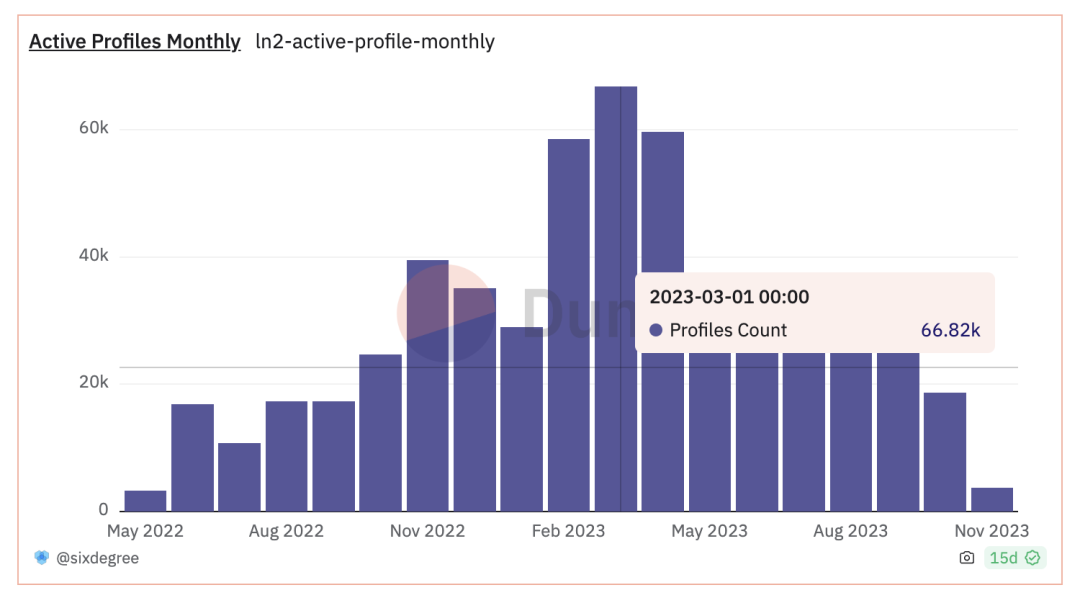
Lens Protocal 协议有 3 个最大的特点:
- 数据价值可以交易:在传统的社交软件中,用户发的内容、社交关系往往是很有价值的,却没能得到合理的激励。例如 X 上的很多 KOL 并不能从优质内容本身活动收益,只能从接广告带货等方式来谋生,但这种行为往往对自己的声誉会有影响。而 Lens 通过将用户数据 NFT 化的方式,所有的账号变成一个 NFT,可以自由的在市场上交易。不过由于现实世界中大部分人会和社交账号实施强绑定,很少进行交易,所以对于用户交易账号的需求价值,需要打一个问号。
- 数据流通性:切入协议层,为社交开发社交 Dapp 的开发者提供模块化组件,供开发者自由组合并构建全新的社交产品。用户的个人资料和所有内容数据作为 NFT,进行 DID 的控制。用户登录 Lens 协议上的某一个应用时,就可以将所有应用的数据都同步在里面,从而实现了数据的流通。例如 Lens 版 twitter、Lens 版 Youtube 都可以通过一个 NFT 来实现数据的互通。
- 去中心化程度高:Lens 协议中的内容、社交和身份都上链,是一个非常 crypto native 的社交协议。
基于 Lens 协议,也诞生了很多有趣的产品,例如 Lenster 和 Phaver。其中 Lenster 在功能和交互体验上和 X 差不多,可以近似的理解为去中心化版的 X。
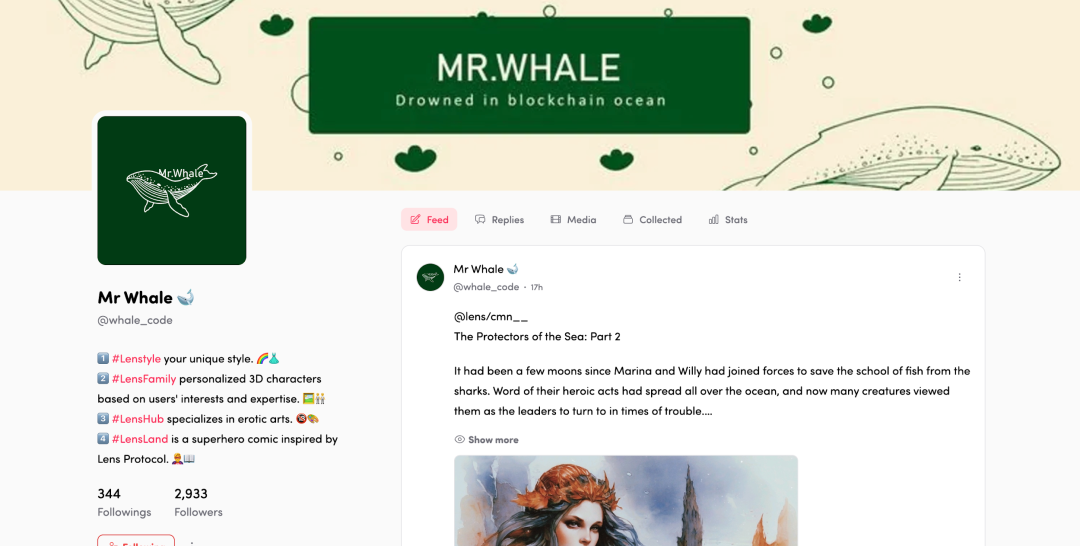
另一方面,Phaver 的模式值得一提,称之为 “点赞即奖励”,用 token 来给优质内容质押,如果质押的内容后续有更多人质押,则获得奖励,同样,质押的奖励也会分成给内容的创作者。且为了避免用户全都质押已经流行的内容,会给意见很流行的文章的质押奖励变得很少,从而激励用户去作为优质内容的早期发掘人,某种程度上和风险投资人比较类似,在最早的阶段发现最好的标的。总的来说,一方面解决了创作者激励的问题,内容的价值取决于用户的认可,另一方面也激励了用户去不断寻找好的内容标的。
2)friend.tech
friend.tech 是前阵子爆火引爆市场的 socialfi 项目,目前累计交易量达到了 1248 万,单日最高交易量在 9 月 13 日达到了 53 万,
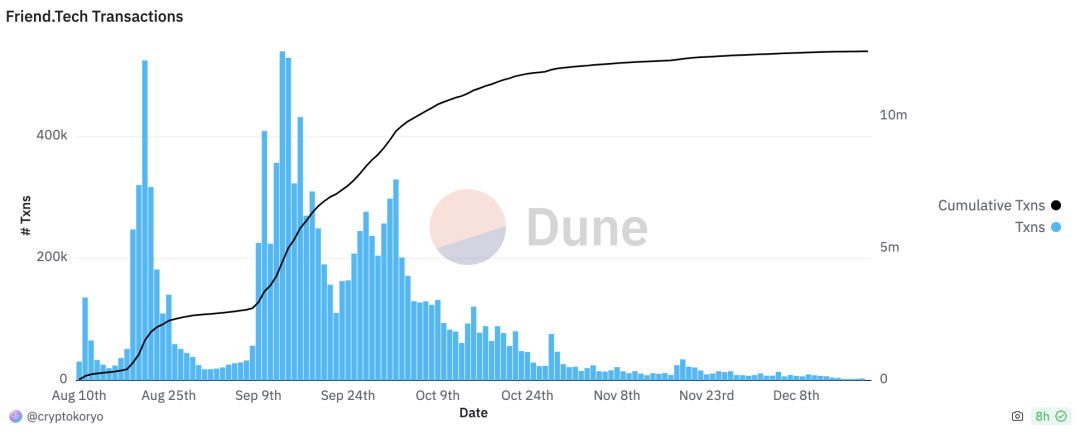
friend.tech 项目本质上将是个人的影响力代币化,来实现粉丝经济:
- 从粉丝的角度来说,一方面,KOL 的 followers 可以在 friend.tech 上购买 KOL 的 key,从而可以加入 KOL 的私聊小群,和关注的 KOL 进行聊天;另一方面,当买该 KOL 代币的人变多之后,key 的价值也会增加,粉丝也可以将其卖出来获得收益;
- 从 KOL 的角度来说,followers 每次交易时会收 10% 的手续费,其中一半手续费会归 KOL 所有,因此 KOL 扩大影响力之后也有了金钱的激励,希望更多人来买自己的 token 从而获取更多的手续费。
简单来说,friend.tech 实现了 KOL 的影响力价值变现,KOL 越有声誉,来购买其份额的用户越多,其身价越高,购买价格就越高,卖出价格也会变高。
friend.tech 在八九月的火爆也引起了中外 Crypto 圈子的热议,许多播客、视频和社区都在讨论相关话题。其爆火可以归结为以下几个方面:
- 创新的模式:用 token 购买 KOL 的 key 的方式实现粉丝经济,模式上比较创新。虽然经济模型依旧是庞氏,但是 KOL 喊人入局,粉丝购买,KOL 再喊,粉丝再购买,能够形成很丝滑的正向循环。KOL 和粉丝成为了利益共同体,共同实现(3,3),成为能推动起来的必要因素。
- 资本助推:friend.tech 在 8 月 19 号官宣了获得 Paradigm 的 5000 万美元种子轮融资,官宣的一天后交易量翻了 4 倍多,用顶级 VC 的加持消息来助推市场热度。
- PWA:friend.tech 没有采用移动端应用的方式,而是用 PWA(Progressive Web App)。通过移动设备上的网络浏览器来实现类似应用程序的体验。使用 PWA 很好地避免了用户必须从 App Store 或 Google Play 下载应用程序,以及需要交给这些平台通常的费用,在应用不复杂的情况下是一种可选择的策略。
此外也有邀请码饥饿营销、Web2 登录方式用户友好等常见的项目冷启动的策略,共同助力了 friend.tech 的飞轮。
虽然在高峰期之后 friend.tech 一直呈现下滑趋势,但其在粉丝经济和价值反哺用户方面做出的创新尝试,也给很多从业者和项目方带来启发。
3)Bodhi
Bodhi 是最近出现的一个很有趣的 Socialfi 项目,发布一天后就在华语区产生了很大的水花,交易量和参与人数直线飙升。在发布后的第二天凌晨 TVL 冲到了 165 个 ETH。其中作者写的第一篇文章(也是产品的白皮书)最高交易到了 4000+美元,最近也仍在 2000+以上。
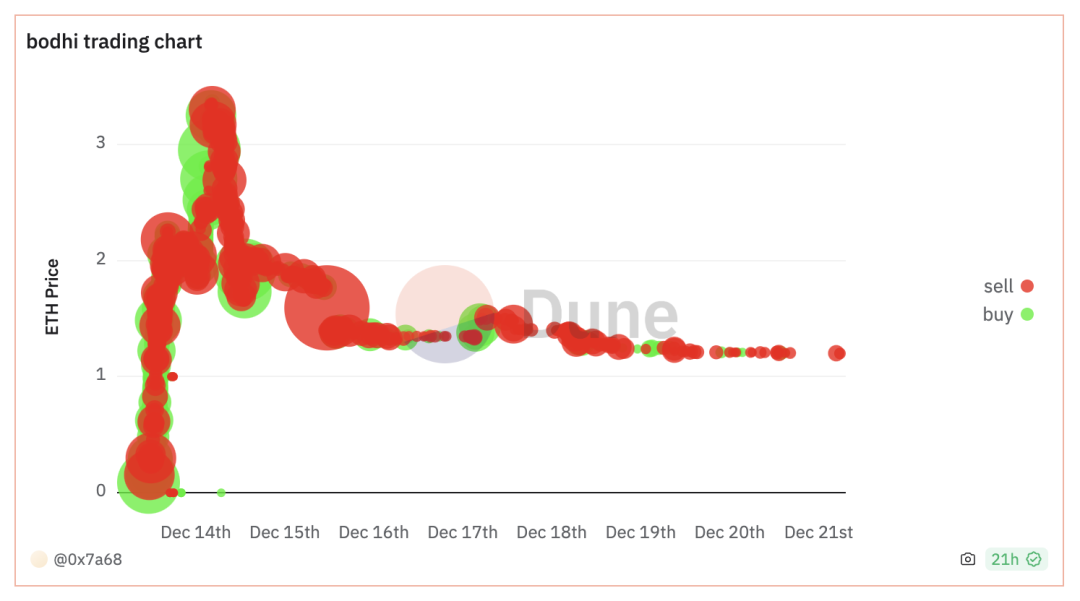
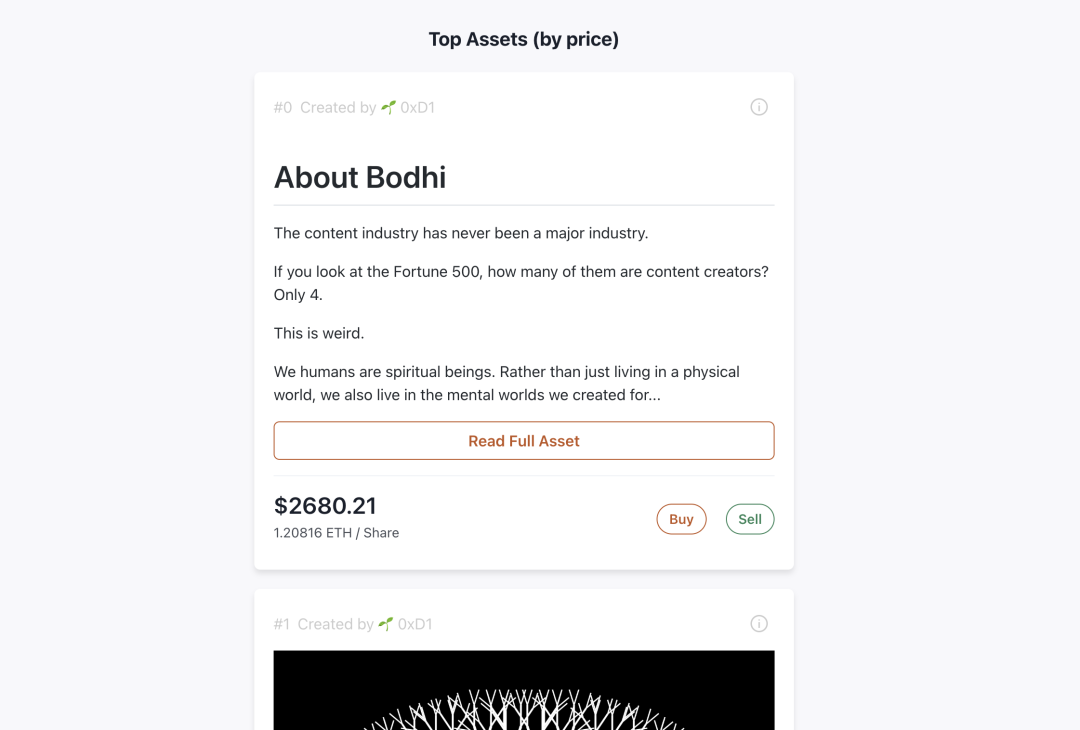
简单来说,Bodhi 的本质是内容资产化,和 friend.tech 的 KOL 声誉资产化有相似之处。差异点在于 friend.tech 是将整个创作者的声誉资产化,每次购买是对整个创作者的 key 进行交易。而 Bodhi 是将创作者的单独的一个内容进行交易,从而让交易的量级扩大,交易的标的更聚焦化。并且 Bodhi 的内容都存储在 Arweave 上,实现去中心化存储。
正如 Bodhi 白皮书中所提到的,内容激励之所以在 Web3 都这么难做,本质上是一个公共物品的资助问题。如果内容存储在中心化服务器上,依然面临着随时消失的可能性。
如果把内容存储在链上,通过内容付费来设置访问权限,就需要进行加密和解密。但目前大部分的解密过程仍然是发生在中心化的服务器里,和直接托管在中心化服务器的本质上没有差别。而如果通过区块链机制解密,本质上仍然是公开的。
深入探究后可以发现,链上的内容具有的两个重要特点也决定了其归属于公共物品:任何人都可以访问它,并且你的访问不影响其他人的访问。可以看出其非排他性和非竞争性,这也正是公共物品的定义。虽然 Bodhi 在爆火之后因为经济模式等原因没能继续维持热度,但其对内容激励的探索和尝试给 social 领域带来的新的创新。
4)现状分析小结
总的来说,在数据价值反哺用户方面,无论是协议层的 Lens Protocol,还是应用类的 friend.tech 和 Bodhi,都在从不同的角度来尝试解决这一需求。
Lens Protocol 采用 NFT 化用户社交图谱数据的方式,允许个人资料和内容数据作为 NFT 进行 DID 控制,并在市场上自由交易,为高价值账号创造交易机会。同时,Lens 的模块化组件为社交 Dapp 开发者提供了数据流通性,实现用户数据在不同应用间的同步和流通。而 friend.tech 则将 KOL 的声誉代币化,允许粉丝通过购买 KOL 的 “key” 加入私聊小群,并获得 KOL 带来的影响力和金钱激励。这些项目通过价值货币化机制,让用户和创作者能更公平地分享其数据和内容的价值。
这种新型社交产品将用户数据价值回归给用户本身,并通过一些机制实现数据价值的可流通性和交易性。虽然目前 Bodhi 等项目在探索内容激励方面可能遇到了一些挑战,但它们为社交领域的数据价值回馈提供了新的探索和尝试,推动了社交平台向更加公正、用户友好和创新的方向发展。未来,随着技术和社区的进步,以及一些新的激励曲线的诞生,Web3 社交产品将继续影响着社交互动方式,为用户和创作者带来更多机会和回报。
2、抗审查
除了数据价值激励之外,抗审查也是目前 Web3 项目中非常重要的一个发力点。传统 Web2 社交平台通常会受到中心化管理,对内容审查、言论限制等方面有各种各样的限制,人们越来越意识到抗审查的重要性。Web3 社交则倾向于去中心化,减少了对平台的依赖,降低了审查和封禁风险,提倡更开放的言论自由。而其中不得不提的两个项目就是 Farcaster 和 Nostr。
1)Farcaster
Farcaster 是一个去中心化的社交协议,供开发者以用户为中心开发社交应用程序。项目的创始人 Dan 和 Varun 都曾是 CoinBase 的高层,该项目一直得到了 Vitalik 的力挺。目前除了 Farcaster 协议之外,官方还推出了前端 Warpcast 产品,目前日活维持在 2000 人左右,总用户数量 4 万多。
总体来说 Farcaster 最大的两个特点在于:
- 去中心化身份:Farcaster 在将用户的身份信息存储在了链上,来保证用户身份的去中心化。和 Lens 类似,数据是和用户的身份绑定的,因此用户在使用 Farcaster 生态中的各个应用的迁移成本很低。
- 链上链下结合来提高用户体验:除了身份信息之外,Farcaster 将用户的发布内容、用户之间的互动数据等高频数据都存在了链下的 Farcaster Hub 中,从而实现快速数据传输和更好的用户体验。某种程度上是牺牲了部分的去中心化来换取了更好的用户体验。
从数据表现来看,虽然在日活和总用户数量方面比 Lens 少一个量级,但是在每日发帖数(7000)和互动数(19000+)方面均高于 Lens,体现出 Farcaster 的用户粘性。不过两者与 Web2 的社交平台相比,用户量级仍处于婴儿阶段。此外,Farcaster 的官方前端产品 Warpcast 需要 1 美元订阅才能使用的收费模式,在尚未大规模价值验证的情况下,对于习惯了免费使用产品的 Web2 用户来说,有一定的迁移成本。
2)Nostr
Nostr 是一个匿名团队开发的开源的去中心化社交协议,最核心希望解决的问题就是抗审查,创始人 Fiatjaf 是比特币和闪电网络的开发者。
Nostr 采用独特的服务框架,由客户端和 “中继器” 组成。任何人都可以成为中继器,中继器之间保持独立,只与用户通信。每个用户都有公钥和私钥,可以简单理解为自己的信箱地址和打开信箱的钥匙。每个人知道别人的地址后,可以发送信息,独一无二的私钥签名确保了发送者的身份,同样代表 “信箱钥匙” 的接收者的私钥,也确保了自己能够收到消息。
说到 Nostr 协议,不得不提到的标志性项目就是 Damus,相信很多读者听说 Nostr 也是从 Damus 开始的。在今年年初,X 前 CEO Jack Dorsey 宣布 Damus 上线 App Store,Damus 开始席卷全球。
Damus 的玩法非常像 X,最大的区别在于其是去中心化。基于 Nostr 协议构建,Damus 的每个用户都是一个客户端,通过无数个中继器来组成彼此通信的网络。正如上面提到,任何人都可以无需许可的运行中继器,这意味着 X 中官方屏蔽用户发帖信息的事情在 Damus 中难以发生,用户可以选择任意的或者是自己的中继器来发布内容,从而最大程度的实现了抗审查性。虽然整体玩法仍然十分简陋,但十分满足了人们对自由的渴望。
虽然最近 Nostr 和 Damus 有一些偃旗息鼓,但每次马斯克在 X 上进行禁言封号等一系列乱操作的时候,一些 Web3 拥护者就会再次投奔抗审查社交的怀抱。Damus 的爆火,也让 Nostr 的开发者们意识到抗审查的需求始终被用户所牵挂。
虽然目前 Farcaster 和 Nostr 协议上没有诞生出持续活跃的应用,但如果我们把 Farcaster 和 Nostr 当做社交领域的 Layer1,无论是像以太坊的 Farcaster 还是像比特币的 Nostr,都在等待下一个杀手级的应用。
3)现状分析小结
在传统的 Web2 社交平台中,中心化管理常导致内容审查和言论限制。X 等平台频繁封号、审查内容,这令人们越来越关注抗审查性质。在 Web3 之前,就有长毛象这样的产品希望能打破审查的限制。随着区块链技术的发展,越来越多的 Web3 项目开始希望打造抗审查的 X、Facebook 等社交项目和协议。
无论是 Farcaster 还是 Nostr,都是十分值得关注的尝试。虽然目前 Farcaster 和 Nostr 协议未孵化持续活跃的应用,Farcaster 的用户量级与 Web2 社交平台相比仍较小,但其高发帖数和互动数显示出用户的黏性。然而,它的收费模式可能劝退部分用户,尤其对于习惯免费使用产品的 Web2 用户来说,迁移成本较高。Nostr 协议上的 Damus 爆火之后,用户并没太多地沉淀下来。
但当时 Damus 的爆火与朋友圈的满屏刷屏,也展现出人们对于一个 Web3 抗审查社交产品天然的好奇和向往。这些项目在抗审查的探索和尝试方面为 Web3 社交带来了新的可能性,也给下一个杀手级应用的出现带来了更多的经验和希望。
3、Web3 带来的原生社交场景
除了数据价值反哺用户、抗审查这两个核心切入点之外,区块链技术也带来了一些 Web3 的原生社交需求。有一些项目开始着力于细分场景开始切入原生社交需求。在这里主要介绍一下社交赛道的明星应用 DeBox。
DeBox
DeBox 最核心解决的问题就是 “持仓聊天”,在传统的群聊中,无论是 token 还是 NFT 的 holder 和信仰者,都比较难避免在群聊中混入其他的人,从而导致可能会出现很多骗子和别有用心的唱空唱多者存在。而 Debox 的群聊功能可以设置成拥有特定的 NFT 或 Token 且达到一定数额的成员进入社群,从而建立了这种共识。
根据官方在今年 8 月公布的数据,DeBox 的注册用户数超过 110 万,用户登陆次数已突破 1300 万。在 Web3 的项目中人气颇高,最近的 BOX 也引起人们热议。
DeBox 早期通过几套 NFT 进行冷启动,吸引了大量用户,并以持仓作为共识,来凝聚有相同看法和观念的社群成员,从而更好地形成自发的社区治理机制,减少信息噪音。由于内容存储和逻辑都在链下,用户体验比较好,比较类似 Web2 社交产品的使用体验。
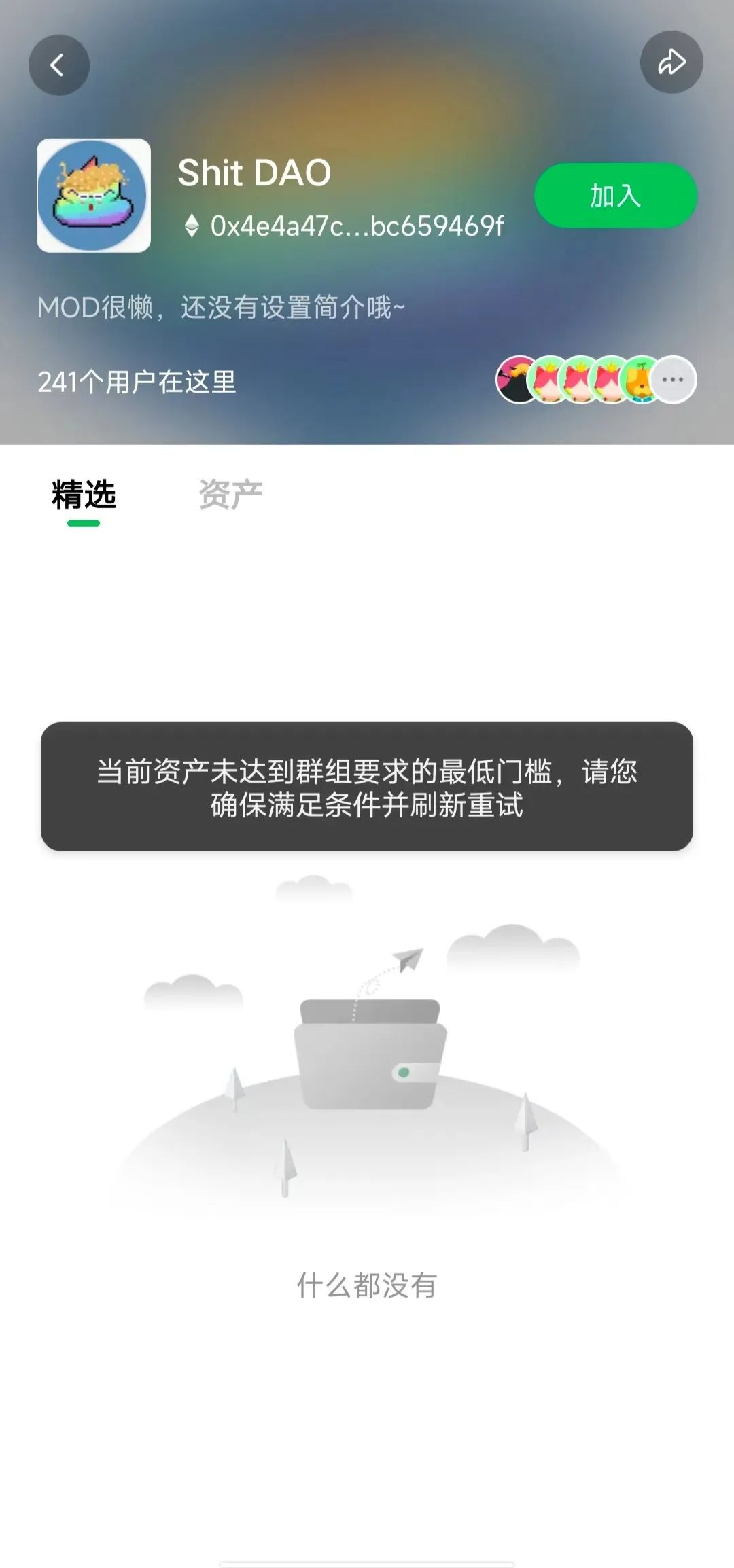
在探索 Web3 社交领域,除了数据价值反馈和抗审查之外,区块链技术带来了一系列原生的社交需求。解决这些需求成为项目们的关注焦点。例如刚刚提到的 DeBox,致力于解决 “持仓聊天” 的问题,构建了一种持有特定 NFT 或 Token 的成员进入社群的共识机制。得益于其对社区治理机制的聚焦,Debox 吸引了大量用户,形成了自发的社区。通过持仓作为共识机制,促进了相同观点和理念的社区成员凝聚,为社区治理提供了更好的框架,减少了信息噪音。
除了 DeBox,还有许多项目在从不同的角度切入社交这个领域,例如 Cyberconnect 协议专注于构建用户社交图谱,官方推出的 Link3 项目聚合用户的链上链下数据,使得用户的链下活动能够在链上得到认证,从而丰富其社交形象;Mast Network 在推出了 X 插件后,还推出了 firefly 聚合器,聚合了 Lens、farcaster、X 等项目的内容,成为 Web3 一站式社交平台。
这些项目的出现反映了 Web3 社交领域的多样化和创新性。伴随着 Web3 的原生场景,它们试图解决不同方面的社交需求,构建更为多样化的的社交环境与场域。
为什么 Web3 社交相比其他赛道相对冷清?
正如上文中提到的项目,伴随着区块链技术的发展,许多 Web3 的社交项目开始尝试创造新的解决方案,在数据价值反哺用户、抗审查以及解决特定社交场景来 build,然而大部分的项目仍处于一个比较低迷的状态,即使少数项目爆火了一阵,但也很快就沉寂了下来。Web3 社交至今仍未出现大规模应用,背后的挑战和局限性可以总结为以下几个点:
1、去中心化与用户体验的权衡
目前的 Web3 社交项目遇到的最大困境之一就是用户体验。
一方面,大部分 Web3 社交平台的用户界面和操作相对复杂,与传统的 Web2 社交平台相比,一些 Web3 的社交项目需要钱包登录,对于没有钱包的 Web2 用户来说比较陌生,阻碍了普通用户进入 Web3 社交产品,限制了其发展和普及。且区块链和加密货币等概念还相对陌生,需要更多的教育和普及工作。许多人对区块链的工作原理和价值仍缺乏理解,这也影响了 Web2 用户对 Web3 社交平台的接受程度。面对此情况,一些 Web3 社交产品采取 Web2 账号登录的方式来减少使用门槛。
另一方面,去中心化和效率之间也存在天然的矛盾,如果所有的行为和数据都需要上链,也会使得用户操作和体验的路径变长。各个社交项目也采取不同的方式进行发展,例如全部内容、社交关系和身份全部上链的 Lens,选择取舍只将身份上链的 Farcaster,除了 NFT 或 token 外全部在链下的 Debox、friend.tech 等等,大家在不同层面上进行了用户体验和部分上链的抉择,来满足特定的社交需求。
全部上链会带来成本和速度的压力,少部分上链会带来用户的”Web2.5″ 社交的质疑,目前的 Web3 项目仍然处在不断拆分和重组上链部分的探索阶段,如何取舍来既满足用户的体验,又解决实际的用户需求,还有很长的路要走。
2、社交产品的替换成本很高
在我们常用的社交产品中,无论是 Facebook、X、Instagram、还是微信,都有很高的迁移成本,这种成本可以包括时间、努力、学习成本、数据迁移和重新建立社交网络等。一旦我们在某个平台上建立了稳定的社交关系、上传了大量数据并适应了该平台的功能和界面,我们更倾向于留在该平台,而不愿意轻易切换到其他平台。
新产品的价值往往 =(新体验-旧体验)-替换成本,而由于社交产品的替换成本在产品类型中属于高频使用的产品,可以发现社交产品有极高的网络效应,一定用户对一些现有的产品产生了依赖之后,替换成本之高让用户很难愿意转到使用其他的产品。
因此,如果 Web3 社交项目只是照抄 Web2 的项目,再加上一点点去中心化的元素,是很难吸引到用户的迁移的。尤其是普通用户对于去中心化存储的感知是较弱的,但是对于用户体验和直接迁移的成本的感知是显性的。因此 Web3 的社交产品想要吸引用户或者成为大规模应用,需要在新体验方面做出更多的创新,结合不同的玩法来满足和现有产品差异化的需求。
3、数据价值反哺用户的可持续性
由于 Web3 行业的金融属性,很多 Web3 的社交项目或者说 socialfi 项目开始结合各种经济模型来积累用户的影响力或者内容。然而目前出现过的项目大都仍处于庞氏的阶段,基本上都需要后面的人给前面的人接盘,没有实现项目的可持续发展,很多时候演变成了一个纯投机的取向。
如何找到合理的代币经济学模型和函数曲线,来平衡金融属性和可持续发展,对于解决数据价值反哺用户的社交产品来说是非常关键的。
4、社交的目标用户与 Web3 用户画像的重叠度较低
从 Messari 的数据可以看出,2023 年 Q3 的融资数据中,Social 类项目的融资在 1000 万美元左右,显著低于 Defi 项目的 2 亿和 Gaming 项目的 1.5 亿美元;在融资项目的数量方面,Social 项目 6 个,也少于 Defi 项目的 67 个和 Gaming 项目的 25 个。究其背后的原因,一个很重要的原因是社交的目标用户与 Web3 用户画像的重叠度较低。
许多用户来到 Crypto 领域是被造富效应所吸引,所以通常会带有投机和致富的需求和目的。而社交最需要的是真实的用户,需要这些用户来到这里进行社交的行为。与一些其他赛道可以通过空投吸引撸毛用户、刷 TVL 来吸引流量不同的是,社交项目如果希望解决真实的社交需求,十分需要拉新和留存住真正有相应社交需求的用户,而不是投机的一次性用户。
相比于社交的用户画像,热爱游戏的玩家中许多也拥有赌性、竞争性等特质,因此 Gamefi 和游戏项目方从 Web3 各类平台吸引来的用户,相对更高程度地转化为了游戏用户;同样,DeFi 项目也很容易吸引到有投资和投机需求的用户,用户画像完美匹配;最近很火热的 BRC20 铭文的爆火,也与其巨大的造富效应离不开关系,而社交用户和 Web3 用户的需求差异性天然比游戏和金融更大,这或许也是社交赛道相比游戏和 Defi 更加冷清的原因之一。
总的来说,相比 DeFi 和 Gaming 赛道,社交的目标用户离钱、赌性和竞争性更远,与 Web3 的用户画像重合度更低。如何吸引目标用户,对于社交项目来说是一个需要长期探索的征程。
社交的商业模式
在最后,也和大家一起探讨下关于全链游戏的商业模式思考。
社交产品的商业模式演变历史可分为几个关键阶段:
- 早期 Web 1.0 阶段(1990 年代末至 2000 年代初):这一阶段的社交产品主要是以论坛、聊天室等形式存在。商业模式主要是基于广告和会员费用收入。一些论坛通过广告展示赚取收入,而聊天室会收取会员费用。例如 AOL(美国在线)基于收取会员费,用户付费才能使用,Yahoo Groups 通过展示广告来获取收入。
- Web 2.0 社交产品阶段(在 2000 年代中后期到 2010 年代):随着互联网技术的发展,社交媒体和网络平台逐渐崭露头角。这一阶段的商业模式主要围绕广告展示和用户数据收集展开。社交媒体平台通过广告展示和精准投放获取收入,而用户数据成为了宝贵的资产,被用于个性化广告和市场营销,Facebook、X、Tiktok 基本都是这种模式。
- Web3 的兴起(2010 年代末):Web3 的到来带来了区块链技术和去中心化思维的应用。社交产品开始尝试新的商业模式,如数据价值回馈、代币经济、NFT 化的数据资产等。用户得到更多的数据掌控权,可以通过参与治理和分享数据获得回报。例如 Lens 将数据资产 NFT 化,friend.tech、Bodhi 通过给影响力/内容赋予价格来实现数据价值回归用户,Farcaster 仍采用传统的会员付费订阅模式等。
此外,由于社交产品本身也有地域性的市场环境差异,Web3 社交产品切入时也有许多需要考虑的因素。例如在数据价值反哺用户这一块,有很大一环是在解决创作者经济问题。
目前创作者的主要收入模式依旧是 ToB 为主,ToC 为辅。由于许多国内外的平台给予创作者的内容观看和点击激励较低,大部分创业者不得不选择通过积累大量的流量资源,来接广告从 toB 侧赚钱,也有一些创作者开始尝试带货这类 toC 的方式,但这两种收入模式对于创作者本身的品牌和声誉都是有一定的负面影响。因此很多 Web3 社交项目希望尝试从 toC 的模式入手,让创作者能直接从优质的内容中获得应有的回报,这也是 friend.tech 和 Bodhi 的思路(通过影响力激励和内容激励)。
- 差异的是,在国内市场,社交和创作者平台的流量是高度垄断的,微信、抖音、快手占据了绝大部分,平台极其强势,创作者对于平台的议价权较低,分成微薄,创作者很难靠平台的流量激励营生,所以不得不选择 Tob 的模式来获得商业收入,包括广告中插,直播带货等等。但由于平台的强势,很难导流到私域。所以国内的创作者更偏向于研究平台的推荐策略-做能推高流量的内容类型-起量-然后进行商业变现。
- 而海外市场社交平台的垄断性情况比国内好一些,公域和私域的流量流通性相对高一些 (国内是因为公域太强势才有了私域的概念),所以 ins、Youtube 等海外社交媒体平台上的创作者有了 follower 之后就可以导流到自己的独立站或者网页,来养活自己。这也让很多海外的创作者可以相对自由地创造自己喜欢的小众内容,也能比较好的导流到私域。
因此面对传统社交产品在不同地区的竞争格局,Web3 社交项目在切入时也可以考虑不同的策略来发力。
总的来说,目前 Web3 的社交项目的商业模式还处于百花齐放的阶段,仍在商业模式的探索和验证中。回顾社交产品的历史,商业模式演变表现出从单一的广告收入模式、会员收入,再到数据垄断后的广告精准投放,再到通过 token/NFT 进行数据价值反哺用户的发展趋势。未来的发展方向可能会更加注重用户数据价值、用户参与度和社区治理,以及更为多元化的商业模式。
社交的未来探索:Web3 社交与 AI 浪潮的碰撞
在最近科技的发展浪潮中,Web3 和 AI 是两个备受关注的明星领域。对于社交的探索也是如此,除了 Web3/Crypto 的社交项目之外,最近也有很多 AI 项目崭露头角,包括一些传统的 Web2 团队,也开始将社交和 AI 进行结合,在匹配、翻译以及虚拟人方面都有很多应用场景。
例如在国内市场,Soul 推出智能对话机器人 “AI 苟蛋”,来与用户进行个性化的沟通;同样,百度也推出了 AI 社交 APP“Skyclub”,来借助 AI 重新切入社交赛道。在海外市场,Meta 通过将 AI 和社交信息流推荐结合,增加了用户的活跃度。去年推荐算法的优化,使 Facebook 的用户停留时长增加了 7%,Instagram 的用户停留时长增加了 6%。从国内外产品的发展可以看出社交产品与 AI 结合是一个重要的发展趋势。
AI 作为生产力的提升工具,在社交领域进行了赋能,其中非常值得关注的领域就是社交和 AI Agent 的结合,通过 AI 来创造虚拟女友、男友、伙伴,来满足人类对于陪伴和情感支持的需求。例如 A16Z 投资的 Character.AI 可以生成类似人类的文本响应并参与上下文对话,从而实现智能聊天机器人,来与用户进行互动。
正如前文提到的人类对社交的核心需求之一:满足情感和情绪上的需要,建立亲密关系并获得支持。目前 AI+社交的项目基本上都是从满足人类情感需求的点切入,开始从虚拟陪伴的方式来去解决真人无法实时满足的陪伴需求,来探索这种需求满足的新的可能性。但人类情感的陪伴需求是否需要 AI 虚拟人来实现,目前还在一个市场和价值验证的阶段。
而在社交产品的发展中,我们发现 Web3 和 AI 在社交方面有互补的潜力。区别于 AI 在生产力方面的提升,Web3 在生产关系和金融激励方面的特性也能很好地为社交产品赋能。例如,币安孵化的 Myshell 将 AI 与 Web3 结合,让用户可以打造自己的 AI 机器人,还推出了基于 Telegram 的语音聊天机器人 Samantha,来满足人类的情感陪伴需求,其代币 shell 用于激励整个产品的生态循环,包括内容消费者进行功能付费以及创作者使用代币增加流量曝光等等。
此外,还有最近 Solana 生态上的 Siya.AI,目标在于构建一个 AI 和真人共同存在的社交伴侣平台,希望将 AI Agent 作为互联网和 Web3 用户的流量入口。此外,通过接入 Realy 提供的 SDK,为创作者经济和 AI 伴侣引入了激励机制。将 AI 和 Web3 结合,来解决社交中情感陪伴的需求。用户通过与 AI 男友和 AI 女友进行对话,还能实现聊天挖矿和 NFT 孵化。
总的来说,AI 和 Web3 作为新时代的两股浪潮,在社交的领域从不同角度发力。前者发力于情感陪伴与支持,后者发力于数据价值反哺用户和抗审查,如今都处于早期的阶段。但无论是切入哪个需求点,也都是希望在不同程度上更好的满足人类对于社交的原始需求。在社交产品探索的道路上,也产生了 AI 和 Web3 的合作和互补。十分期待在新技术和模式的诞生下,下一个大规模社交应用的诞生,或许 AI 和 Web3 能在社交领域碰撞出新的火花,来更好地满足人类在社交方面的多样化需求。
总结
社交作为每个人的刚需,无论年龄上的男女老少、还是场景上的熟人陌生人,社交产品在 Web2 产业中占据了流量的闸口,也是 DAU 里也是最高的一类。因此 Web3 social 从概念诞生以来,就一直被 Web3 的从业者寄予了 Mass Adoption 的厚望。
从积极方面来说,一方面,Web3 社交在数据价值和用户反馈方面带来了革命性的变化。相较于传统的 Web2 社交产品,Web3 将用户数据视为一种有价值的资产,通过代币激励和 NFT 化等方式,将数据的价值反馈给用户,建立在用户数据分享、创作者激励和社区共识的基础上。
另一方面,Web3 社交产品的抗审查性为用户提供了更大的自由度和隐私保护。通过区块链技术和去中心化特性,这些产品降低了审查和封禁的风险,提倡开放的言论自由。这为用户创造了更安全、开放的社交环境,使得社交互动更加真实和自由。
然而,目前的 Web3 社交始终面临着一些挑战,至今都没有出现大规模应用。替换成本很高和网络效应是其中非常大的挑战。传统社交产品已经在用户中建立了强大的网络效应,用户习惯、资源投入和平台依赖度使得他们难以迁移到新的 Web3 社交平台,这使得复制 Web2 的新产品难以扩展其用户基础和增长。另一个挑战是关于可持续性和用户体验的平衡。一些 Web3 社交产品为了强调去中心化和数据控制,却牺牲了用户体验和便利性。在追求创新的同时,保持产品易用性和吸引力对于用户的留存和吸引力至关重要。
正如 Tom Standage 的《社交媒体简史》这本书中提到,人类从诞生以来就有社交的需求,无论技术怎么演变,人类始终需要信息的互通。从古罗马政治家用来交换信息的莎草纸信,到美国独立、法国大革命期间的宣传册,从报纸、广播、电视再到互联网和区块链技术,人类始终在多快好省和言论自由与审查之间的张力中进行变革。
相比于电话、短信和报纸,Web2 的社交产品 Facebook、X、WeChat 使得人们能够更快、更好、更便宜地进行交流和传播,而 Web3 核心发力的点在于抗审查的言论自由和数据价值回归用户,虽然目前并没有像 Web2 产品的大规模应用,但是对于抗审查和数据价值回归的诉求依然存在在用户的心中,等待着某一刻的爆发。
对于未来的发力点,未来可以考虑的是社区属性:因为社交一定不是广播式的,而是总是在中心化和去中心之间摆荡的。社区是 Web3 社交非常重要的特点,并且数据主权和开放性的特质也和社区十分匹配,社区可以实现多向的,互动式的社交,或许可以成为未来 Web3 社交类产品的发力方向之一;此外,和游戏等其他方向的交叉结合或许也能碰撞出不一样的火花。
正如在 Web3 社交中的挑战和局限性中提到,Social 赛道在用户画像上存在的困境,导致相比 BRC20 赛道目前的火热,Web3 Social 赛道稍显冷清,但 Web3 社交的发展前景仍然寄予了很多人的期望。不断涌现的新项目和技术不断推动着这个领域向前发展。在技术不断演进的同时,我们也看到了更多针对可持续性和用户体验的探索和改进。这个领域正不断成熟,寻找着自身的发展路径,将更多的创新带给了用户,并对整个社交领域产生深远的影响。
最后的最后,非常感谢黑铁、Adazz、阿山、Harlan、Trinity 等伙伴提供的帮助,以及在交流过程中非常乐于分享耐心的大家,真心希望在这个赛道里的 builder 们都越来越好!
免责声明:作为区块链信息平台,本站所发布文章仅代表作者及嘉宾个人观点,与 Web3Caff 立场无关。文章内的信息仅供参考,均不构成任何投资建议及要约,并请您遵守所在国家或地区的相关法律法规。