



OpenAI, an artificial intelligence research and deployment company, has recently launched ChatGPT, a new chatbot that uses the GPT-3 language model to generate conversational responses in real time.
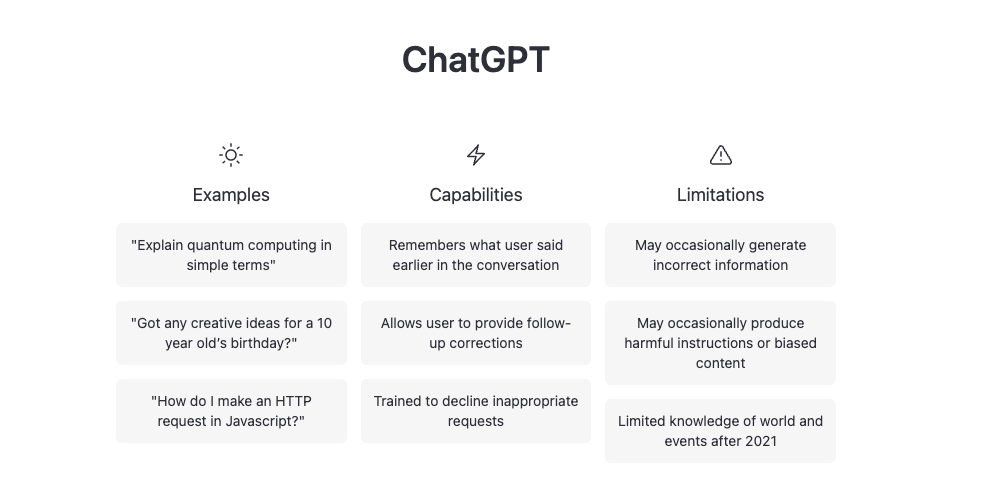
Although it is still in development, ChatGPT’s early demo has already demonstrated it can handle a wide range of tasks, from answering common questions like “what is blockchain?”, to writing code to develop applications in different programming languages.
The public release of the new feature has opened the door to a discourse on how AI will interact with blockchain technology, venture investments, and markets in the future.
Considering that blockchains are open ledgers, and GPT-3 is a trained artificial intelligence, the rise of ChatGPT calls into question what the model will do with the information that is provided by blockchains.
This is where the blockchain industry and AI intersect with the latter providing tools to simplify and support the infinite amount of on-chain data.
As more practices such as remittances, loans, and transactions move towards blockchain technology, there is a great opportunity to use all that data as input to produce actionable insights in more streamlined ways, thus rendering AI models more valuable.
AI models can provide projects numerous benefits when it comes to using blockchain technology, such as automated smart contracts and improved security.
Additionally, there’s also a decentralized version of this algorithm. Together, an entity that intends to decentralize artificial intelligence, released the v1 of GPT-JT, a model that “integrates several recently published open techniques and datasets and was trained with [a] decentralized approach.”
The development and growth of artificial intelligence, robotics, and machine learning models are a threat to many, if not most, of the existing jobs in the labor market.
The model used by ChatGPT enables the creation of smart contracts from scratch in blockchain applications. The chatbot can also help identify smart contracts vulnerabilities, a feature that has surprised many within the crypto community.
Additionally, ChatGPT, or any chatAI for that matter, can be implemented to analyze, digest, and summarize MEV data that can be presented as BI dashboards. People who are not so tech savvy can suddenly become Dune Wizards using ChatAI to write SQL dashboards or web scraping dashboards to retrieve MEV, NFT, or DeFi data.
The fact that one can simply ask a chatbot if there is a vulnerability in a smart contract may prove to be a double-edged sword. On the one hand, it could be a useful tool for developers and auditors to build more resilient applications, but on the other hand it could be used by hackers to exploit a protocol and steal funds.
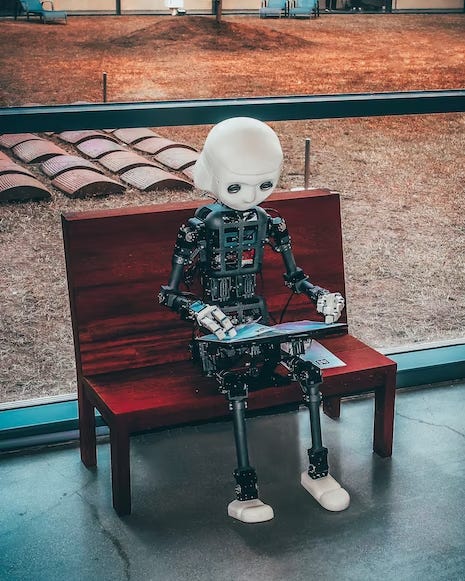
While it’s evident that ChatGPT or any language model built so far can still not replace a senior developer, or a well-performed audit by an experienced team, it still makes us wonder how much further it can go.
“This is not singularity yet. As AI keeps evolving and GPT4 is around the corner, the use cases and capabilities of AI will scale with an order of magnitude.” - Hans Xiang, senior investment associate at Sino.
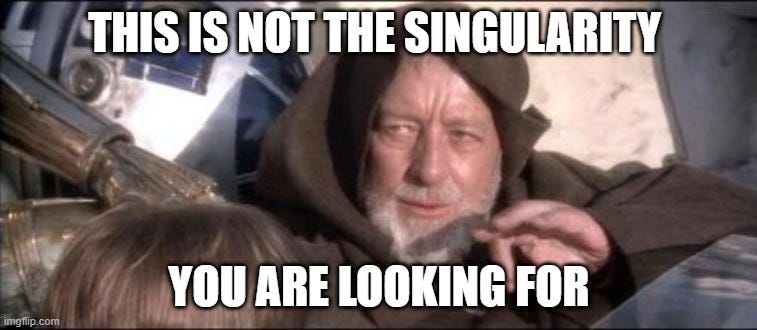
The AI model can also be used to write news articles, research papers, creative content for social media, and more. While many are worried that these new technologies will replace human beings in the workforce, one could argue that these worries have appeared time and time again in human history, and have instead resulted in the creation of new kinds of jobs.
These new tools could mark the beginning of increased demand for more creative types of writing, rather than kickstarting a dark era in which human participation becomes obsolete.
Though AI has tremendous potential to improve many aspects of our lives, one common concern around these technologies is the safeguarding of copyright, as well as preventing plagiarism. However, one might assert that AI is just a tool that can be utilized by humans, not a tool to replace human intelligence.
“It’s like when we were kids and our teachers would say we don’t have to learn how to do most math on paper because we can just do it with a calculator. The difference here is that more and more knowledge and processes fall under this augmentation. The greater advancement comes from AI’s ability to generate outputs that make sense without direct documentation or examples.” - Eric Nemeth, investment associate at Sino.
The truth is that, with time, technology only gets better. However, the disruptive force of technology has been the main driver of human progress in the past centuries, and only the passage of years will tell if this time will be any different.