



Introduction
Q1 wrapped up with quite a few major announcements for Ethereum Layer 2s. The leading Optimistic Rollup, Arbitrum, launched its token to transition to DAO governance, and two different zero-knowledge rollups, Polygon zkEVM and zkSync, both launched their mainnets.
Q1 of 2023 has seen significant developments in Ethereum Layer 2s, with major announcements from leading Optimistic Rollup, Arbitrum, as well as the mainnet launches of Polygon zkEVM and zkSync. With TVL surging for Arbitrum and Optimism, the layer-2 ecosystem is experiencing substantial growth.
In this article, we will examine the competing rollup technologies, optimistic and zero-knowledge, and discuss their potential impact on Ethereum's scalability and decentralization.
Optimistic vs. Zero-Knowledge Rollups: Technological Differences
The primary distinction between optimistic and zero-knowledge rollups lies in their transaction validation methods. Optimistic rollups rely on fraud proofs, while zk rollups utilize validity proofs. Zk rollups hold a capital efficiency advantage, as fraud proofs require a one-week dispute period before fund withdrawal, compared to immediate withdrawals with validity proofs.
If you contrast the two types of rollups, you would find that optimistic rollups are cheaper and a bit more developer-friendly at the moment, but zk rollups are more decentralized and capital efficient. Both of these technologies are in an early form, however, so what they look like now is not necessarily what they will look like in the future.

Optimistic rollups currently offer a more developer-friendly environment and lower costs, while zk rollups boast greater decentralization and capital efficiency. The race between the technologies depends on whether optimistic rollups can attain comparable performance with a decentralized model before zk rollups achieve EVM equivalence and a similar developer experience.
Scalability and TPS
As far as scalability potential is concerned, both are fairly comparable by claiming an upside at or above 2000 transactions per second (TPS). However, their transaction speed will be influenced by changes to Ethereum's mainnet throughput.
One of the proposed changes to Ethereum, EIP-4844, is instituting something called proto-danksharding to the blockchain. This change would allow for blobs of data to be posted to the beacon chain for a short period of time, which has the potential to bring down rollup fees significantly. It is essentially a beta version of sharding, which is a long-term goal for the Ethereum roadmap but is very difficult to implement. EIP-4844 would be beneficial for both optimistic and zk rollups.
Chain Usage
When examining the actual TPS of Ethereum and its layer 2s, as opposed to their potential, only Arbitrum has occasionally surpassed Ethereum in daily transactions. However, this increased usage resulted in prohibitively high gas costs and other issues, such as a temporary outage on the day of Arbitrum's airdrop.
Chain downtime has not been constrained to just optimistic rollups, however, as zkSync also experienced about 4 hours of downtime on April 1st due to an issue concerning its block backlog database, which has since been resolved.
EVM Equivalence
Achieving EVM equivalence in zero-knowledge rollups is a challenge. It means the rollup can execute Ethereum bytecode and allow developers to seamlessly integrate EVM contracts. Equivalence is crucial for encouraging developers to bridge applications easily and ensuring contracts function consistently on zk-rollup layer 2s and the mainnet.
Currently, layer 2s are EVM compatible, supporting Ethereum bytecode and enabling development using the Solidity language. One of the reasons that Arbitrum rose to prominence as a Layer 2 was because it offered a developer experience nearly identical to Ethereum, especially regarding DeFi-specific tooling.
Issues
The consequences of non-EVM equivalence were evident when a project called Gemstone on zkSync raised 1.7 million dollars in ETH, only to discover it was stuck. This issue arose due to a subtle difference in zkSync, where ETH wasn't recognized as the native token, causing the fund transfer function to fail repeatedly. Fortunately, the zkSync team resolved the issue, but it highlights how minor changes to contract functionality can have significant consequences.
Polygon zkEVM has been working towards EVM equivalence during its development. It currently achieves type-3 equivalence, supporting most EVM opcodes and two precompiled functions. The Polygon team aims to attain full equivalence, enabling a seamless developer experience when transitioning between the mainnet and zkEVM.
The path to Decentralization and Scalability
Optimistic rollups currently rely on a centralized sequencer, but decentralization is possible. However, performance decline and the profitability of running centralized sequencers serve as disincentives to pursue this path. Users seem content with the platforms despite their relative lack of decentralization, which may discourage efforts to decentralize the sequencing process.
As more sequencers are added, the consensus process for the sequencers would likely increase the finality of transactions on the rollup. Additionally, running the sequencer is highly profitable, and having it controlled by the team means that lots of the revenue is being generated for the team, and as of now, there is nothing to suggest that this revenue would be shared with governance token holders on any platform.
Do users even care?
The high usage of Arbitrum and Optimism suggests that users are happy to use the platforms in spite of the relative lack of decentralization. Unless this trend changes, there is both an economic and performance-related disincentivization to decentralize the sequencing process.
Zk rollups, such as zkSync and Polygon zkEVM, appear to be more decentralized in their initial states. The Ethereum community generally views zero-knowledge proofs as having the most potential for scaling Ethereum, albeit being a challenging technology to work with.
Winner-take-all?
High valuations for layer 2 startups indicate that this will be a competitive space. For instance, Scroll, a zk rollup, received $50 million in funding at a $1.8 billion valuation.
For a smart contract platform that is still in testnet and has yet to prove meaningful traction, 1.8 billion dollars seems like a huge number, but investors likely see the upside from current valuations of similar projects.
So, is this funding justified, or are investors jumping into a narrative while there is lots of hype around zero knowledge platforms?
Infrastructure and Layer 3s
The current infrastructure of layer 2s makes them not very compatible with one another. A big fixation of several smart contract platforms outside of Ethereum has been enabling the connection of independent blockchains that serve particular use cases, also known as app chains. These will potentially be possible at the layer 3 level, but it also means that all of these layer 2 protocols are effectively competing with one another to be the main execution layer of Ethereum.
It is possible that some will find their own niches that they specialize in, but that is not currently happening.
The competition for scaling Ethereum will be fierce, but that does not mean it will be winner-take-all. Arbitrum, Optimism and Polygon are all currently splitting market share while having similar applications on their platforms. Whether or not having tons of independent ecosystems that operate the same is efficient is another question though. It will be interesting to see how things continue to evolve as the Ethereum community tries to scale the blockchain enough to meet demand for more real-world use cases.
Wen Airdrop?
This is probably the most common phrase that is uttered whenever a new chain is released, with early users hoping to be rewarded with tokens that can be valuable. Arbitrum consolidate at a fully diluted valuation above $10 billion immediately after releasing a token, and many early users were rewarded with tokens that ranged in value from $1,000-$15,000 just for using the network in its early days.
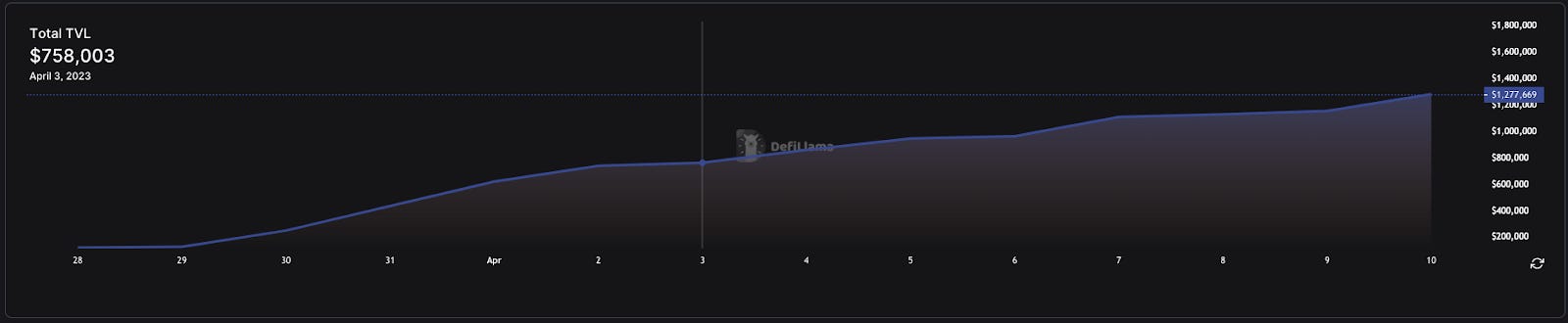
It remains one of the largest driving factors of network growth, and puts products that are not going to offer an airdrop into a position where they have a harder time gaining traction. This could be seen play out in real time with zkSync and the Polygon zkEVM, as zkSync attracted nearly $100 million in TVL compared to just a touch over $1 million for Polygon zkEVM.
Polygon zkEVM TVL since launch:
zkSync TVL since launch:
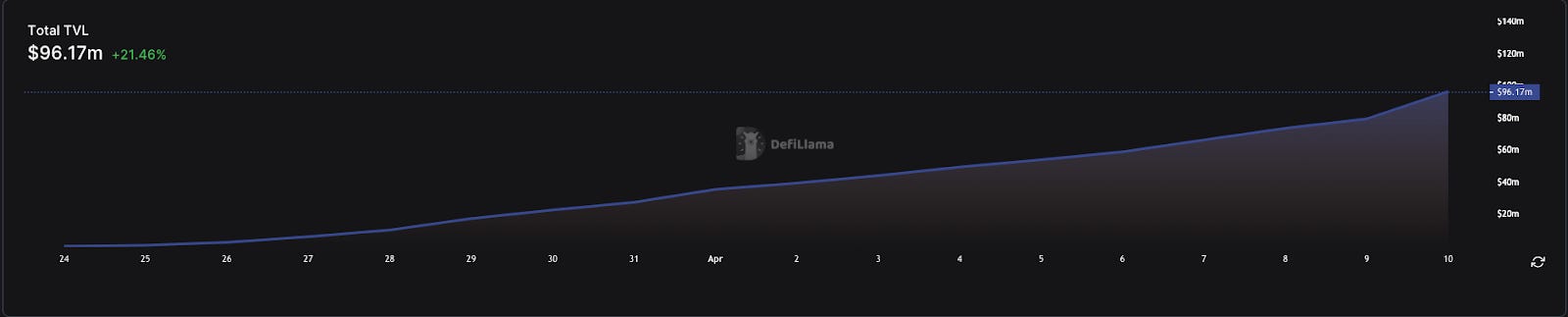
There is nothing to suggest the disparity in adoption is only related to airdrop farming though, and other factors such as the wider variety of applications deployed on zkSync currently compared to Polygon zkEVM cannot be ignored. Given that the Polygon PoS chain has one of the largest collections of dApps among all chains, the potential for growth in applications deployed on the zkEVM is certainly high.
Conclusion
Investment is flooding into the Layer 2 ecosystem, with numerous teams working to scale Ethereum using various rollup architectures. The competition among smart contract platforms to secure market share and become the leading infrastructure for the future of the internet is intensifying, and it's evident that these teams will have the resources to achieve their goals.
Ethereum currently holds a dominant position in the crypto market, with nearly 70% of the total value locked in crypto on its mainnet. However, as adoption continues to rise, the layer 2 ecosystem must scale sufficiently to meet this demand or risk losing it to other platforms. The implementation of The Merge took considerable time, and today there is immense competition within and beyond Ethereum to develop infrastructure capable of supporting the next billion users. The influence of EIP-4844 and other roadmap components on the scalability of rollups will undoubtedly play a critical role in determining whether Ethereum maintains its dominance in the crypto landscape.